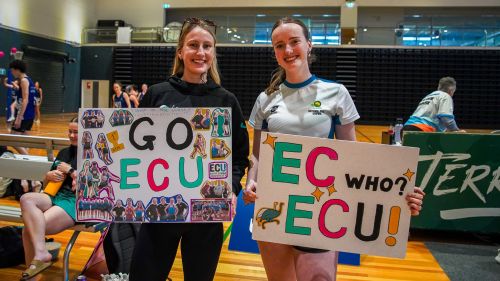
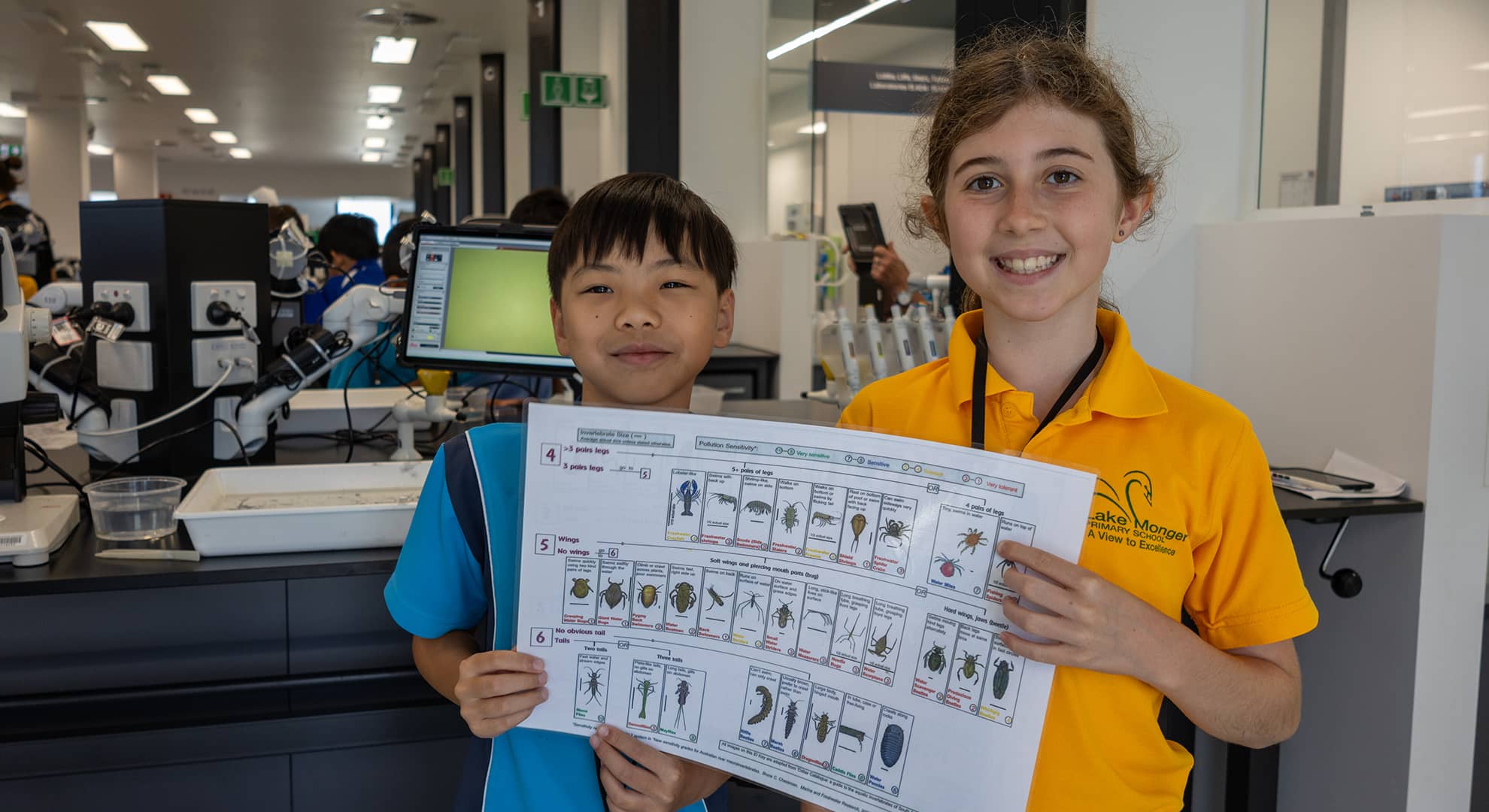
 Primary school students got a taste of the engaging activities and challenges they will encounter through the PEAC program at ECU Joondalup. Image credit: Cass Rowles.
More than 450 of the State's brightest young minds were inspired by the prospect of one day attending university when they visited ECU Joondalup as part of their PEAC Induction Day.
The Western Australian Department of Education's Primary Extension and Challenge (PEAC) program aims to engage high-potential learners in upper primary school with challenging courses that extend their learning and nurture their abilities while complementing their regular schooling.
Each year, the School of Education at Edith Cowan University (ECU) proudly hosts the annual PEAC Induction Program over three days in December.
The event gives Year 4 students from across the northern suburbs an opportunity to meet fellow high-potential learners before they start the program in the new year, participate in fun thought-provoking workshops and engage with expert academics and students from ECU.
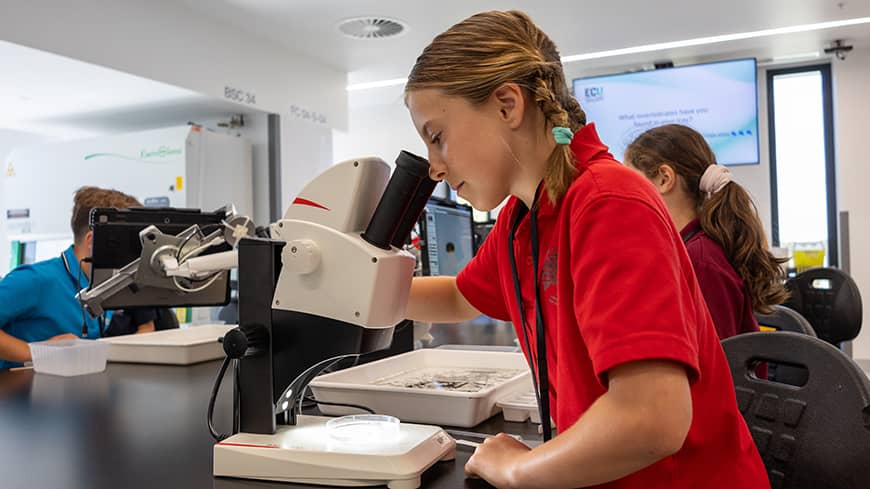 PEAC student identifying macroinvertebrates in ECU's Science SuperLabs. Image credit: Cass Rowles.
Dr Julie Boston, Director of Partnerships and Engagement in the School of Education at ECU said the University was proud to support and nurture the innovative minds of tomorrow.
"Our university is more than a place of education. It is a vibrant community that champions intellectual curiosity, creativity, and a lifelong passion for learning—values that resonate deeply with the PEAC program," Dr Boston said.
The University showcased its support through a series of inspiring workshops designed to give new PEAC students a taste of the engaging activities and challenges they will encounter on their journey through the PEAC program.
"These experiences are tailored to stimulate their intellectual curiosity and creativity while fostering collaboration and exploration."
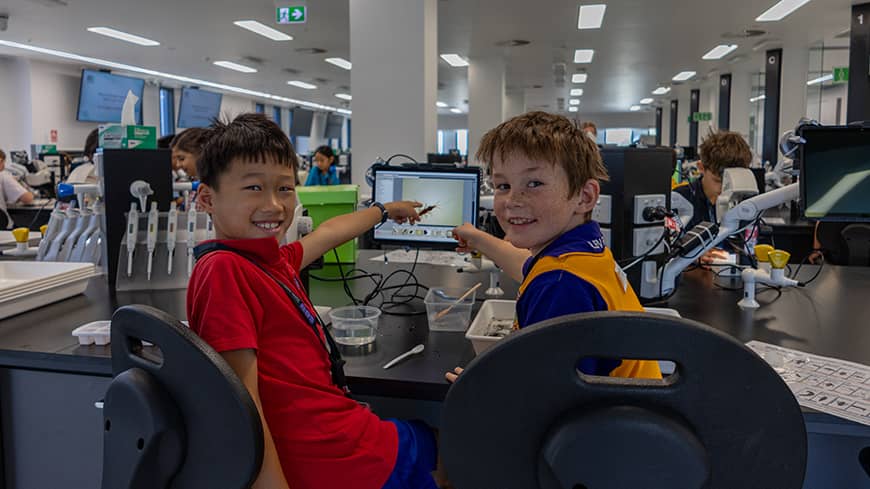 Visiting PEAC students learning what bugs live in ECU's Joondalup Campus lake. Image credit: Cass Rowles.
Students had the opportunity to try hands-on activities, including:
- ECU Science SuperLabs visit to identify and investigate macroinvertebrates that live in the Joondalup Campus lake
- Circus workshop that challenged students to think about movement patterns and how to manipulate objects in new and exciting ways
- Cyber security scavenger hunt to explore concepts such as cryptography and intelligence gathering
- Heartworx session investigating an electrocardiogram (ECG), their pulse and the anatomy of the human heart.
The sessions included fun icebreakers and were facilitated by ECU academics and student assistants from the School of Science, the School of Medical and Health Sciences and the School of Education, including ECU pre-service teachers.
Bronwin Vowles, PEAC Program Coordinator, North Metro said partnerships between ECU pre-service teachers and PEAC educators, through experiences such as this, ensure that key knowledge, skills and understandings of best practice in teaching high-potential learners are passed on to the next generation of teachers.
"PEAC teachers are an expert, highly experienced group of professionals whose practice models excellence in this field," Ms Vowles said.
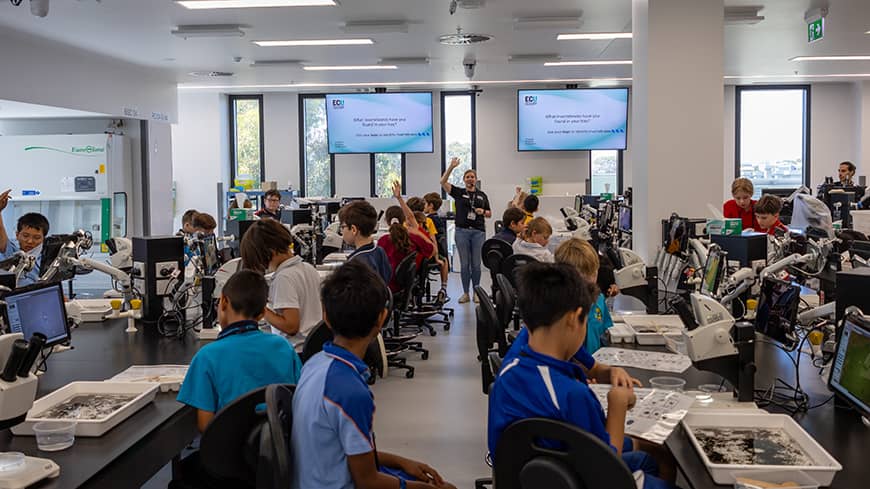 ECU's fun, thought-provoking Aquatic Beasts workshop was a hit with PEAC students. Image credit: Cass Rowles.
Ms Vowles said the PEAC curriculum provides valuable opportunities that empower students to uplift their learning.
"Behind every thriving PEAC student is a teacher who sees beyond achievement data and understands the complexity, creativity and individuality of high-potential minds," Ms Vowles said.
"Our accelerated pathways allow high-potential learners to dive deeply into concepts that genuinely challenge them.
"PEAC courses mirror the complexity of the real world. Students analyse, design, innovate, and reflect just as scientists, engineers, artists and philosophers do.
"The students in the PEAC program are the young people who will design solutions, build new technologies and rethink systems. They are wired for challenge, driven by curiosity and capable of extraordinary innovation."