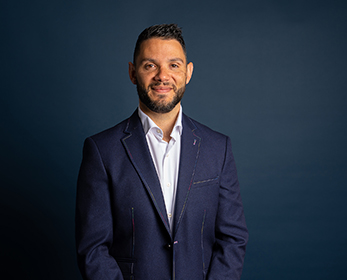
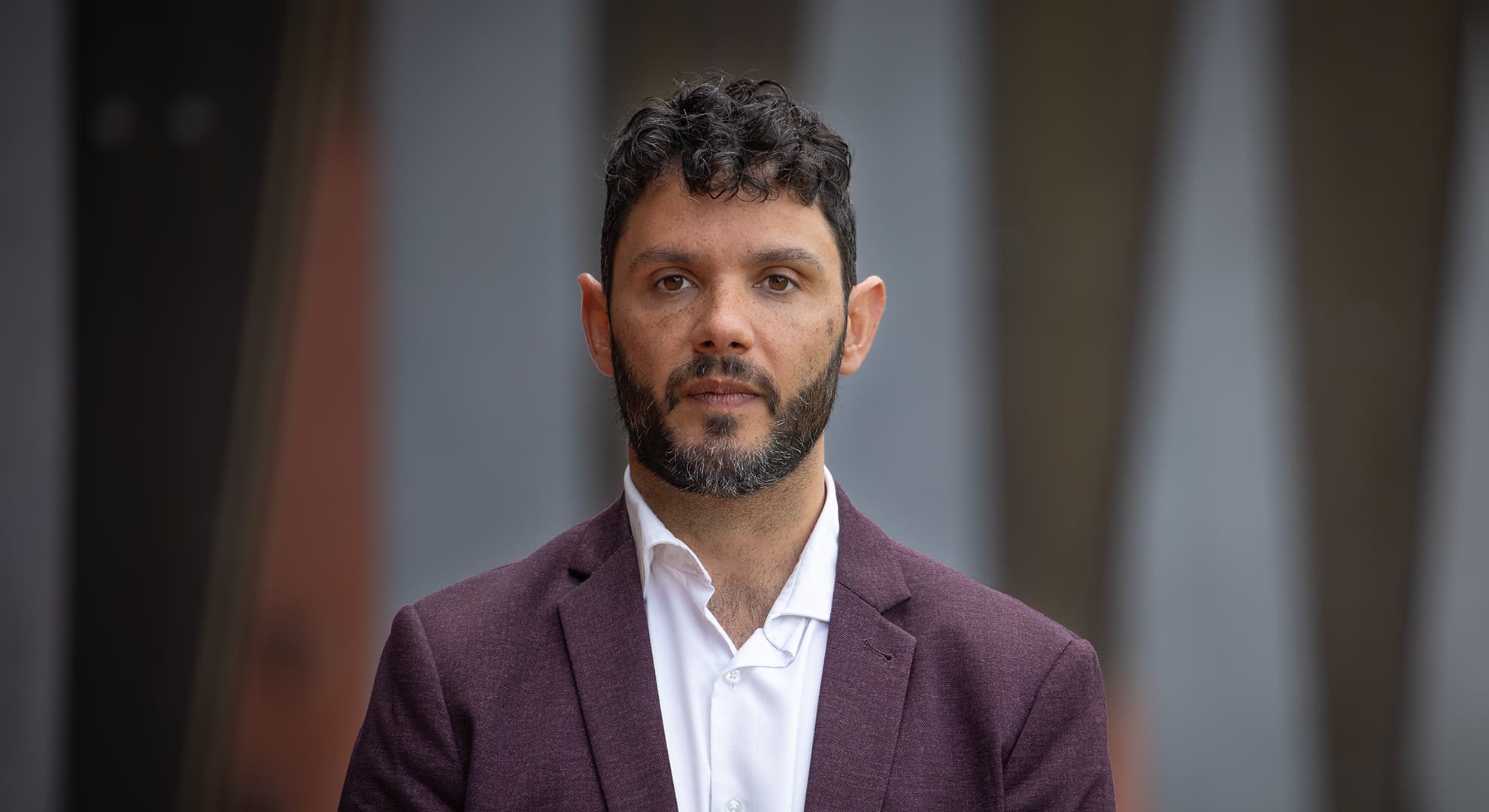
 Professor Braden Hill is an Agent of Change for 16 Days in WA, appointed for his leadership in taking direct action to prevent family and domestic violence.
Edith Cowan University (ECU) Vice-Chancellor (Student and Education) Professor Braden Hill has marked the start of 16 Days in WA – Stop Violence Against Women by calling for men to engage in tough conversations and actively work to help stop family and domestic violence.
16 Days in WA is a Western Australian Government campaign to stop family and domestic violence by driving cultural, behavioural and attitudinal change that begins on 25 November.
Inspired by a global movement, 16 Days in WA occurs annually and in 2026, Professor Hill has taken on a key role in the campaign, selected as an Agent of Change by the Department of Communities.
Agents of Change are appointed for their leadership in taking direct action to prevent family and domestic violence.
Professor Hill is joined by ECU 2026 Young Alumni Award winner and We are W/M co-founder Nicolette Beard in the cohort of 2026 Agents of Change, which also include Fremantle Dockers AFLW player Orlagh Lally, West Coast Eagles AFLW co-captain Bella Lewis and AFL forward Milan Murdock, Olympians Iona Anderson, Matt Wearn and Peter Bol, Perth musicians Birds of Tokyo, Perth Lynx Co-Captain Alex Ciabattoni and more.
Watch Professor Braden Hill's video about 16 Days in WA
From 25 November to 10 December, the state will be alive with events that explore the key messages of the 16 Days in WA campaign.
Professor Hill used the launch of the campaign to insist that young boys and men must regularly engage in conversations about gender-based violence to understand how they themselves can become Agents of Change.
"As an Indigenous educator, and Indigenous leader and an Indigenous man, for me it’s really important that I'm an Agent of Change, to show that for our communities to thrive, we have to tackle family and domestic violence and break the cycle of intergenerational trauma," Professor Hill said.
"We know that gender-based violence is enabled by a culture of disrespect – particularly towards women.
"We also know it's enabled by a culture that normalises power, authority and control as what it means to be a man. These are conversations we should be having in the classroom, as well as outside the classroom, on the sporting field, online, and over the dinner table.
"We have to be able to talk to young boys and men about the role that they can play as Agents of Change in ending family and domestic violence."