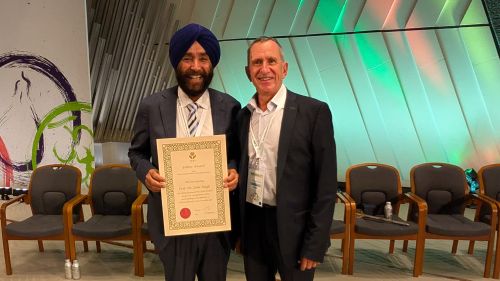
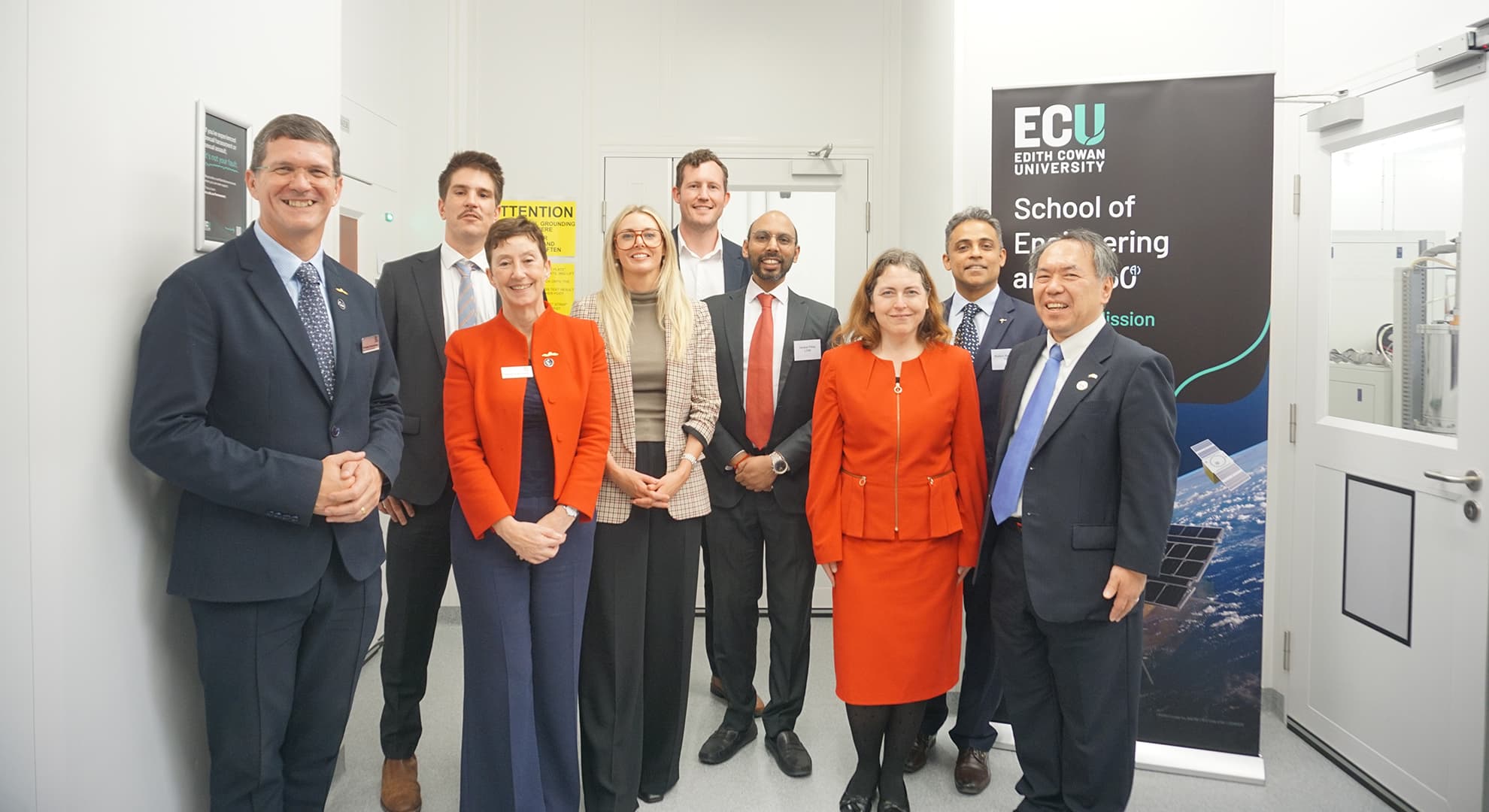
 Left to right: Professor Paulo de Souza (ECU), Rhodri Biggs (DEED), Vice-Chancellor Professor Clare Pollock (ECU), Caitlin Collins MLA, Ashley Smith (LC60), Venkat Pillay (LC60), Colleen Alstock (US Consul-General), Rueben Rajasingam (LC60), Karimata Atsushi (Consul-General of Japan) out the front of ECU's new cleanroom.
Western Australia has taken a significant step toward becoming a major player in the space industry with the official opening of a dedicated satellite cleanroom capability at Edith Cowan University (ECU).
Working with Australian Earth Observation company LatConnect 60 (LC60 AI), the facility will be used to assemble a Low Earth Orbit satellite to gather high-resolution data on carbon emissions.
The project marks an important step toward WA's first commercial high-resolution Earth Observation satellite assembly capability, building on the State's existing university-led spacecraft programs and space infrastructure.
The cleanroom, which received $3.5 million in State Government funding, is part of a long-term effort to establish WA as a centre for satellite assembly, integration and testing, moving the State higher up the chain in the global space economy.
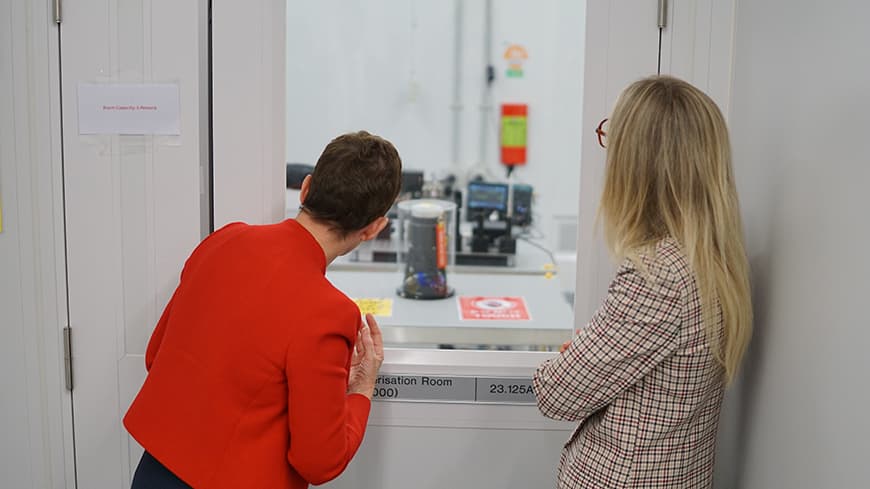 ECU Vice-Chancellor Professor Clare Pollock and Parliamentary Secretary to the Minister for Defence Industries, Caitlin Collins, look into the sealed cleanroom
"This is not just about one satellite. We are seeing this investment from the WA Government translate into real capability on the ground - infrastructure, skills and sovereign know-how that positions Western Australia as a serious contributor to Australia's space future," Minister for Science and Innovation, Hon Stephen Dawson MLC said.
The cleanroom was built to ISO 6 (Class 1000) standards. It was upgraded through close collaboration between LC60 engineers and ECU's technical teams to meet the strict environmental requirements needed for optical equipment and sensitive satellite electronics.
Within two weeks of its opening, the facility will begin work to install a high-resolution short-wave optical payload, into a satellite ahead of launch.
LC60 is building the Short Wave Infra-Red Satellite (SWIRSAT) constellation, a planned group of between 9 to 18 Australian earth observation satellites to be assembled at ECU as capability matures.
"LC60 has already delivered large-scale Earth observation data capture and analytics across approximately 900,000 square kilometres for Western Australian Government use cases. Future SWIRSAT datasets are expected to support applications across defence, national security, agriculture, environmental monitoring and emergency response," Minister for Defence Industries, Hon Paul Papalia CSC MLA said.
"From the outset, LC60 set out not only to build satellites, but to build the capability to do it here in Western Australia. This facility allows us to build equipment locally, train local engineers and lay the groundwork for future satellite missions built in WA," LC60 Co-Founder Reuben Rajasingam said.
The ECU partnership with LC60 anchors this capability within Western Australia's education and research ecosystem, ensuring skills, infrastructure and expertise are developed locally and endure beyond individual missions.
"The collaboration demonstrates the power of university and industry partnerships. The satellites are built here by our students and local industry, with benefits that extend across our economy," ECU Vice Chancellor, Professor Clare Pollock said.
Designed as a common use facility, the cleanroom will also be available to other organisations for future satellite and payload builds.
"This facility connects our students and researchers directly to live space missions. It turns learning into practice and research into capability, while supporting an advanced industry that aligns with Western Australia's long-term economic diversification," ECU's Deputy Vice Chancellor Research, Professor Paulo de Souza said.
LC60's satellite is scheduled for launch in February.