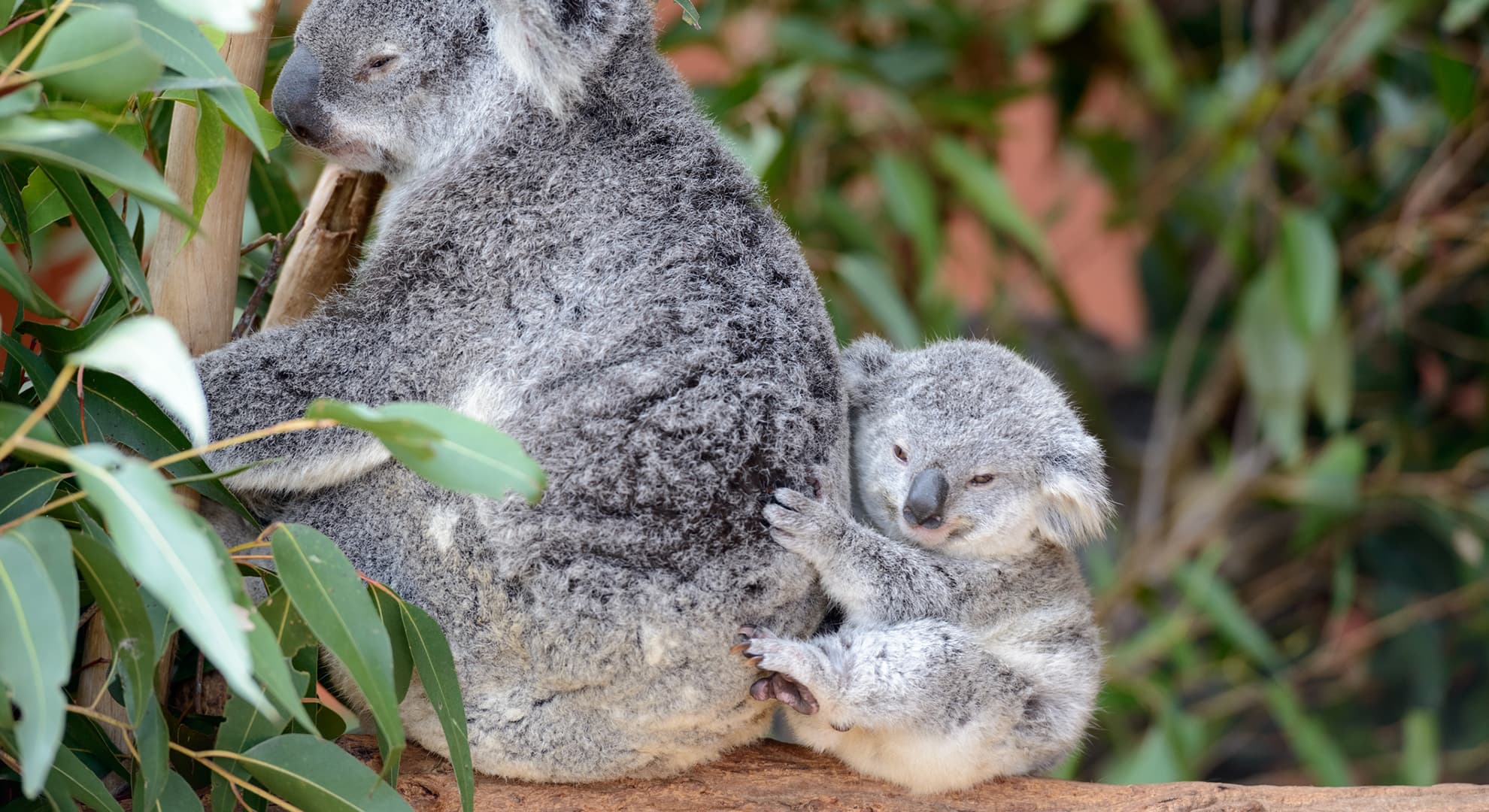
 New research has given fresh insights into how koala milk transforms throughout a joey's first year. Credit: iStock AndriiSlonchak
New research into koala milk could prove crucial to future conservation of the iconic, yet endangered Australian species.
The paper, led by Edith Cowan University (ECU) PhD candidate Manujaya W. Jayamanna Mohottige, is part of a larger study into koalas and their survival led by the Australian Wildlife Genomics Group at The University of Sydney and the Australian Research Council Centre of Excellence for Innovations in Peptide and Protein Science. Mr Mohottige's PhD work reveals how koala milk transforms throughout the first year to meet a growing joey's needs.
"Koala milk is more than just food. It contains peptides and proteins that help the joey grow stronger, supporting energy, development and early protection," Mr Mohottige explained. "Young koalas are born tiny and fragile. They rely heavily on their mothers to grow, stay safe and survive.
"A healthy pouch environment, together with nutrition and immune protection from its mother's milk, is essential for a joey's growth and survival."
Unlike human milk, marsupial milk is known to change its composition over time to meet the joey's evolving growth and immune needs. This study followed koala milk across early, mid and late lactation stages, uncovering how it adapts to meet the needs of the growing young.
"We were able to identify and quantify the proteins at each key lactation stage," Mr Mohottige said. "Early milk plays a key role in protecting the joey, mid-stage milk may help protect the brain during its fastest growth, and later milk has a composition reflecting the joey's increasing independence."
A deeper understanding of koala milk could help scientists develop improved milk substitutes for orphaned joeys, strengthening rehabilitation efforts and supporting koala conservation.
Professor Michelle Colgrave from ECU's School of Science said koalas faced many threats, including bushfires, road accidents, disease and habitat loss.
"The ultimate goal of our study is to improve milk formulas for orphaned koala joeys by adding key peptides and proteins found in natural koala milk, helping them survive and grow stronger," Professor Colgrave explained. "Many young koalas that enter rehabilitation centres need to be hand-reared, and survival rates can be improved.
"Koalas have an extremely short gestation period of just over a month and complete most of their development in the pouch. That is why the proteins and peptides in their milk play such crucial roles in providing both nutrition and immune protection to the developing joey.
"Matching milk replacers to the natural shifts we see in koala milk could greatly help hand-reared joeys grow and thrive," she said.
The next step for the research team is to study how the milk proteins are influenced by where they live, what they eat and their genetic differences.
Lactation-stage specific protein shifts in koala milk mirror the joey's growth needs was published in the International Journal of Biological Macromolecules.