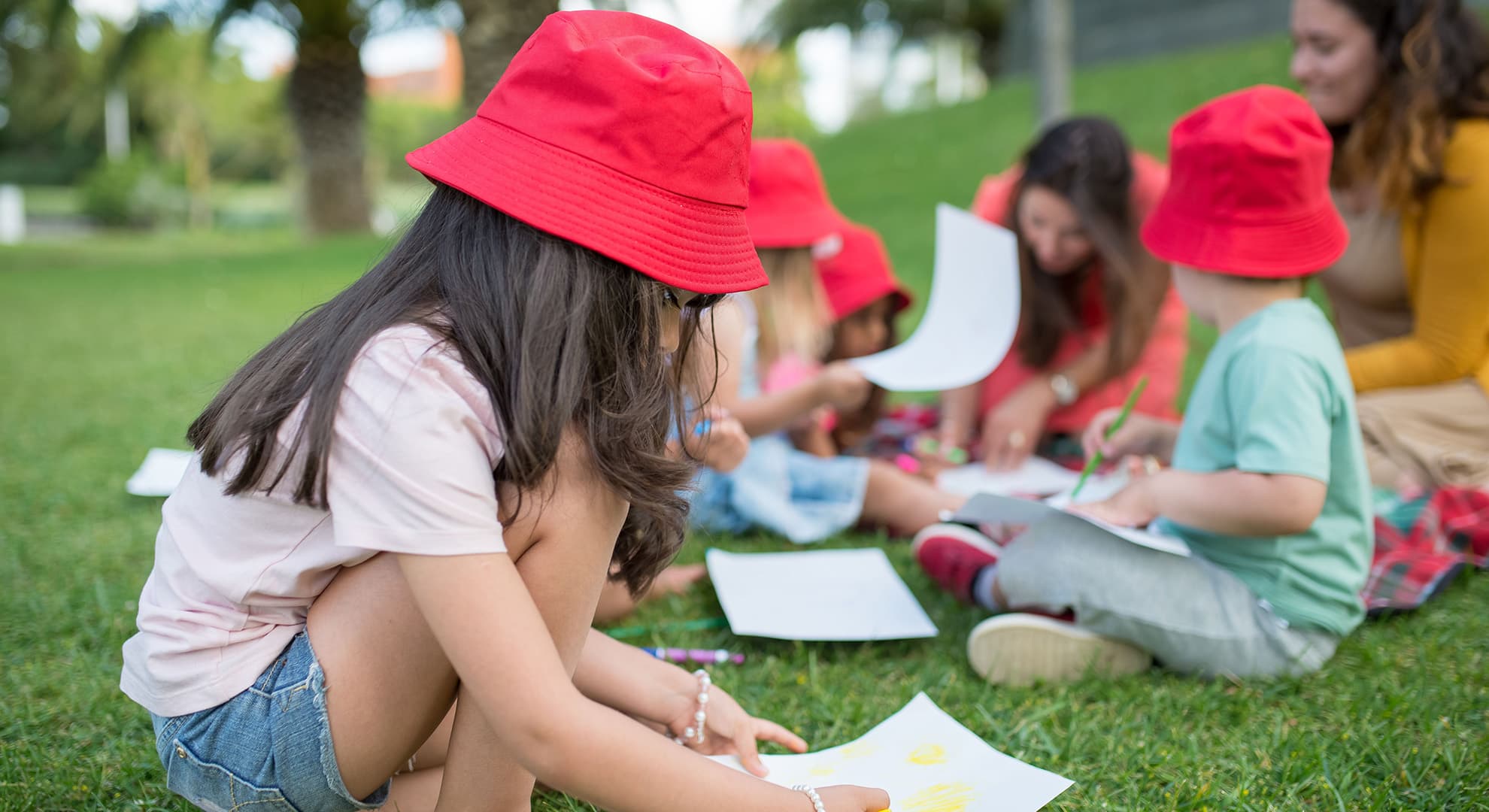
 The Children’s Learner Engagement Monitor promotes the integrated use of Dialogic Drawing and LIVE Threads.
Researchers from Edith Cowan University's (ECU's) School of Education have developed a practical guide to understanding and monitoring young children's learner engagement.
The guide provides a much-needed tool through which teachers can gather evidence directly from children about how they are experiencing school and use it to inform targeted engagement plans.
"The early years of school are such an important time in a child's life. It's when they're not only learning what full time school is all about and building new relationships but also starting to develop their identity as a learner," said Dr Amelia Ruscoe, who is part of ECU's Early Childhood Research team.
"The challenge is that young children don't always tell us how they're feeling or what is engaging about learning through words alone. They communicate in many ways, and if we rely only on what we observe, we can sometimes miss part of the story. By finding ways to better understand children's perspectives, we can create learning experiences that make the most of the knowledge and skills children bring with them to school and help them thrive from the very beginning."
The Children's Learner Engagement Monitor promotes the integrated use of Dialogic Drawing and LIVE Threads, with Dr Ruscoe pointing to the importance of monitoring the natural fluctuations in learner engagement as an ongoing practice for high impact teaching.
"By creating time in programs to spend even short periods paying close attention to what children are communicating about their experience of learning, we can better understand what matters to children and what influences their engagement at school. Using contexts such as drawing or focussed play for reaching shared understanding is particularly important for children from diverse language backgrounds and those with specific learning needs, ensuring every child has an equal opportunity to be heard, understood and supported in their learning journey."
The Children's Learner Engagement Monitor was developed in collaboration with ten early childhood teachers from Association of Independent Schools of Western Australia (AISWA) schools across Perth and the South West, using 140 Dialogic Drawing events with 75 children aged three to five years, and three primary school children.
Through this process, the ECU researchers critically examined assumptions about learner engagement and co-designed a robust, ethically grounded tool for monitoring engagement in school and learning. Using teacher expertise and evidence from practice, a tool was co-designed that aligned with the principles and practices of the Early Years Learning Framework for Australia, is respectful of children's rights and voices, and reliable in practice.
Dr Ruscoe said that teachers using the Children's Learner Engagement Monitor have reported that the process has strengthened their relationships with students, fostered trust and brought often-invisible aspects of engagement into view.
"The teachers who used this guide also said it reminded them of why they decided to become teachers in the first place, revealing the benefits are not just for children, but also for building and sustaining a love of teaching," Dr Ruscoe said.
"Every child deserves the opportunity to feel connected, valued and engaged at school. The challenge for educators is keeping their finger on the engagement pulse, recognising when a child may be starting to disengage and understanding what might be driving that experience."
"The Children's Learner Engagement Monitor helps give children a voice, providing schools with meaningful insights into how students are feeling and engaging with their learning. That understanding allows schools to respond earlier, tailor support where it's needed most, and create learning environments where every child has the best chance to thrive and succeed."