
Bachelor of Technology (Motorsports)
Course code G68
Why study at ECU?
-

A great student experience
As an ECU undergraduate, you can expect the best overall student experience of any of the 38 public universities in Australia. More about QILT.
-

The highest quality teaching
ECU is one of the best unis in Australia for teaching. We've had 19 straight years of 5-star ratings in the Good Universities Guide to prove it!
-

One of the world's young guns
We're ranked one of the world's best universities under 50 years old, and we've already established a global reputation for such a young institution.
Toggle between study options for Domestic or International students
About this Course
The course supports the development of core problem-solving abilities and the technical, financial and management skills associated with manufacturing industries in general, and the motorsports industry in particular.
Students gain a solid understanding of the design, simulation and fabrication processes, and the management issues associated with production of the complex automotive systems and the components that underpin the motorsport industry. The course provides a stimulating and supportive learning environment, with an enthusiastic and articulate approach that reflects the culture of motorsports.
Students also have the opportunity to further develop competencies through the provision of extra-curricular activities to help progression into the motorsports industry.
Australian Qualifications Framework (AQF) level
This course has been accredited by ECU as an AQF Level 7 Bachelor Degree Award.
Course code
G68Entry requirements
70 Indicative ATAR
ECU admission and English language requirements apply.
See Course Entry for further information.
Fees
Commonwealth supported - estimated 1st year indicative fee AUD $8,650
See Fees and Scholarships for further information.
Availability & Campus
| Location | Semester 1 | Semester 2 |
|---|---|---|
| City Campus | ||
| Joondalup | FT PT | FT PT |
| South West | ||
| Sri Lanka | ||
| Online |
About this Course
The course supports the development of core problem-solving abilities and the technical, financial and management skills associated with manufacturing industries in general, and the motorsports industry in particular.
Students gain a solid understanding of the design, simulation and fabrication processes, and the management issues associated with production of the complex automotive systems and the components that underpin the motorsport industry. The course provides a stimulating and supportive learning environment, with an enthusiastic and articulate approach that reflects the culture of motorsports.
Students also have the opportunity to further develop competencies through the provision of extra-curricular activities to help progression into the motorsports industry.
Australian Qualifications Framework (AQF) level
This course has been accredited by ECU as an AQF Level 7 Bachelor Degree Award.
Course code
G68CRICOS code
056770FEntry requirements
ECU admission and English language requirements apply.
See Course Entry for further information.
Fees
International students - estimated 1st year indicative fee AUD $44,800
See Fees and Scholarships for further information.
Availability & Campus
| Location | Semester 1 | Semester 2 |
|---|---|---|
| City Campus | ||
| Joondalup | FT | FT |
| South West | ||
| Sri Lanka | ||
| Online |
Course Entry
Admission requirements you'll need to meet for this course.
-
The following course-specific admission requirements are mandatory and must be satisfied by all applicants. These requirements are in addition to or supersede the minimum requirements outlined within the Academic admission requirements band section below.
It is desirable that all applicants have passed Mathematics: Methods ATAR, with equivalents considered, and Physics ATAR or Engineering Studies ATAR, with equivalents considered. Alternatively applicants can complete bridging units during the first year of their studies, if required, if they have not passed one or more of these subjects.
All applicants must meet the academic admission requirements for this course. The indicative or guaranteed ATAR is as published (where applicable) or academic admission requirements may be satisfied through completion of one of the following:
- AQF Cert IV;
- Successfully completed 0.25 EFTSL of study at bachelor level or higher at an Australian higher education provider (or equivalent);
- Undergraduate Certificate;
- Skills for Tertiary Admissions Test;*
- University Preparation Course;*
- Indigenous University Orientation Course; or*
- Experience Based Entry Scheme.*
* Further information can be found on the Study course entry page.
For international students, requirements include your secondary school results
-
English competency requirements may be satisfied through completion of one of the following:
- Year 12 English ATAR/English Literature ATAR grade C or better or equivalent;
- Special Tertiary Admissions Test;*
- IELTS Academic Overall band minimum score of 6.0 (no individual band less than 6.0);
- Successfully completed 1.0 EFTSL of study at bachelor level or higher in the UK, Ireland, USA, NZ or Canada;
- University Preparation Course;
- Indigenous University Orientation Course;*
- AQF Diploma, Advanced Diploma or Associate Degree;
- Successfully completed 0.375 EFTSL of study at bachelor level or higher at an Australian higher education provider (or equivalent); or
- Other tests, courses or programs defined on the English Proficiency Bands page.
* Further information can be found on the Study course entry page.
Course Entry
Admission requirements you'll need to meet for this course.
-
The following course-specific admission requirements are mandatory and must be satisfied by all applicants. These requirements are in addition to or supersede the minimum requirements outlined within the Academic admission requirements band section below.
It is desirable that all applicants have passed Mathematics: Methods ATAR, with equivalents considered, and Physics ATAR or Engineering Studies ATAR, with equivalents considered. Alternatively applicants can complete bridging units during the first year of their studies, if required, if they have not passed one or more of these subjects.
All applicants must meet the academic admission requirements for this course. The indicative or guaranteed ATAR is as published (where applicable) or academic admission requirements may be satisfied through completion of one of the following:
- AQF Cert IV;
- Successfully completed 0.25 EFTSL of study at bachelor level or higher at an Australian higher education provider (or equivalent);
- Undergraduate Certificate;
- Skills for Tertiary Admissions Test;*
- University Preparation Course;*
- Indigenous University Orientation Course; or*
- Experience Based Entry Scheme.*
* Further information can be found on the Study course entry page.
For international students, requirements include your secondary school results
-
English competency requirements may be satisfied through completion of one of the following:
- Year 12 English ATAR/English Literature ATAR grade C or better or equivalent;
- Special Tertiary Admissions Test;*
- IELTS Academic Overall band minimum score of 6.0 (no individual band less than 6.0);
- Successfully completed 1.0 EFTSL of study at bachelor level or higher in the UK, Ireland, USA, NZ or Canada;
- University Preparation Course;
- Indigenous University Orientation Course;*
- AQF Diploma, Advanced Diploma or Associate Degree;
- Successfully completed 0.375 EFTSL of study at bachelor level or higher at an Australian higher education provider (or equivalent); or
- Other tests, courses or programs defined on the English Proficiency Bands page.
* Further information can be found on the Study course entry page.
Course Details
Semester availability
Semester 1: Study full-time at Joondalup
Semester 1: Study part-time at Joondalup
Semester 2: Study full-time at Joondalup
Semester 2: Study part-time at Joondalup
Course Structure
| Unit Code | Unit Title | Credit Points |
|---|---|---|
| ENM1101 | Race Car Anatomy | 15 |
| ENS1154 | Introduction to Engineering | 15 |
| ENM1102 | Engineering Drawing and Computer Aided Design | 15 |
| MAT1137 | Introductory Applied Mathematics | 15 |
Note: Students who have not passed Year 11 Mathematics: Methods ATAR (or equivalent) must complete the bridging unit MAT1108 Foundations of Mathematics before they can enrol in MAT1137 Introductory Applied Mathematics. Students who have passed Year 11 Mathematics: Methods ATAR (or equivalent) can consider discussing a pre-requisite waiver with the Mathematics coordinator to enable them to enrol into MAT1137 Introductory Applied Mathematics. Note: Students who have passed Mathematics: Methods ATAR or Mathematics: Specialist ATAR (or equivalents) should enrol in MAT1250 Mathematics 1 in Year 1 Semester 1 in place of MAT1137 Introductory Applied Mathematics, and enrol in MAT1251 Mathematics 2 in Year 1 Semester 2 in place of MAT1250 Mathematics 1.
| Unit Code | Unit Title | Credit Points |
|---|---|---|
| ENS1101 | Engineering Mechanics | 15 |
| ENS2214 | Computer Aided Design and Manufacturing | 15 |
| ENS1253 | Electrical Engineering Fundamentals | 15 |
| MAT1250 | Mathematics 1 | 15 |
Note: Students who have not passed Physics ATAR (or equivalents) must complete the bridging unit SCP1132 Introduction to Physics before they can enrol in ENS1101 Engineering Mechanics.
| Unit Code | Unit Title | Credit Points |
|---|---|---|
| ENS1115 | Materials and Manufacturing 1 | 15 |
| ENS2108 | Mechanical Science | 15 |
| ENS3105 | Mechanical Design and Development | 15 |
| ENM2209 | Race Car Systems | 15 |
| Unit Code | Unit Title | Credit Points |
|---|---|---|
| ENS2110 | Materials and Manufacturing 2 | 15 |
| ENS3150 | Advanced Mechanical Design | 15 |
| ENS2113 | Engineering Dynamics | 15 |
| Elective Unit | x 1 | 15 |
| Unit Code | Unit Title | Credit Points |
|---|---|---|
| ENS3173 | Technology Professional Practice | |
| ENM3211 | Motorsports Project 1 | 15 |
| ENS3214 | Advanced Materials and Manufacturing Systems | 15 |
| ENS2159 | Engineering Innovation and Ethics | 15 |
| ENM2104 | Instrumentation and Measurement | 15 |
| Unit Code | Unit Title | Credit Points |
|---|---|---|
| ENM3212 | Motorsports Project 2 | 30 |
| ENS3216 | Engineering Management | 15 |
| Elective Unit | x 1 | 15 |
| Unit Code | Unit Title | Credit Points |
|---|---|---|
| ENS2170 | Principles of Industrial Maintenance | 15 |
| ENS2257 | Microprocessor Systems | 15 |
| MAT1251 | Mathematics 2 | 15 |
| ENS2120 | Engineering Systems | 15 |
| ENS3553 | Signals and Systems | 15 |
| ENS3243 | Structural Analysis | 15 |
| ENM3218 | Fluid Mechanics | 15 |
| ENS3190 | Mechanics of Solids | 15 |
| ENS1180 | Introduction to Energy and Resource Engineering | 15 |
| ENS3212 | Electrical Machines and Transformers | 15 |
Note: Electives chosen from outside this list must be approved by the Course Coordinator.
G68|11
For more detailed unit information for this course take a look at our Handbook. To organise your life for next semester visit the Teaching timetable.
Student handbookCourse notes
Important course notes
-
Before being eligible to graduate from this course, students must meet the requirement of accumulating and being credited with a minimum 8 weeks professional practice in a relevant industry environment. This can be commenced at any point in the course.
Course learning outcomes
- Apply broad discipline knowledge of the underpinning natural and physical sciences and in depth understanding of specialist bodies of knowledge within the motorsports technology domain.
- Think critically, and apply established engineering methods to broadly defined motorsports problems.
- Apply systematic engineering synthesis and design processes to conduct and manage projects in the motorsports technology domain, with some intellectual independence.
- Demonstrate conceptual understanding of the mathematics, numerical analysis, statistics and computer and information sciences which underpin the motorsports technology discipline and fluently apply engineering techniques, tools and resources.
- Demonstrate clear and coherent oral and written communication in professional and lay domains.
- Demonstrate a global outlook and knowledge of contextual factors impacting the motorsports technology domain, including respect for cultural diversity and indigenous cultural competence.
- Demonstrate effective team membership and team leadership to implement motorsports technology projects according to relevant standards of ethical conduct, sustainable practice and professional accountability.
- Demonstrate responsibility for own learning, professional judgement and an understanding of the scope, principles, norms, accountabilities and bounds of contemporary practice in the motorsports technology domain.
Professional Recognition
CourseAccredited by: Engineers Australia
Course Details
Semester availability
Semester 1: Study full-time at Joondalup
Semester 2: Study full-time at Joondalup
Course Structure
| Unit Code | Unit Title | Credit Points |
|---|---|---|
| ENM1101 | Race Car Anatomy | 15 |
| ENS1154 | Introduction to Engineering | 15 |
| ENM1102 | Engineering Drawing and Computer Aided Design | 15 |
| MAT1137 | Introductory Applied Mathematics | 15 |
Note: Students who have not passed Year 11 Mathematics: Methods ATAR (or equivalent) must complete the bridging unit MAT1108 Foundations of Mathematics before they can enrol in MAT1137 Introductory Applied Mathematics. Students who have passed Year 11 Mathematics: Methods ATAR (or equivalent) can consider discussing a pre-requisite waiver with the Mathematics coordinator to enable them to enrol into MAT1137 Introductory Applied Mathematics. Note: Students who have passed Mathematics: Methods ATAR or Mathematics: Specialist ATAR (or equivalents) should enrol in MAT1250 Mathematics 1 in Year 1 Semester 1 in place of MAT1137 Introductory Applied Mathematics, and enrol in MAT1251 Mathematics 2 in Year 1 Semester 2 in place of MAT1250 Mathematics 1.
| Unit Code | Unit Title | Credit Points |
|---|---|---|
| ENS1101 | Engineering Mechanics | 15 |
| ENS2214 | Computer Aided Design and Manufacturing | 15 |
| ENS1253 | Electrical Engineering Fundamentals | 15 |
| MAT1250 | Mathematics 1 | 15 |
Note: Students who have not passed Physics ATAR (or equivalents) must complete the bridging unit SCP1132 Introduction to Physics before they can enrol in ENS1101 Engineering Mechanics.
| Unit Code | Unit Title | Credit Points |
|---|---|---|
| ENS1115 | Materials and Manufacturing 1 | 15 |
| ENS2108 | Mechanical Science | 15 |
| ENS3105 | Mechanical Design and Development | 15 |
| ENM2209 | Race Car Systems | 15 |
| Unit Code | Unit Title | Credit Points |
|---|---|---|
| ENS2110 | Materials and Manufacturing 2 | 15 |
| ENS3150 | Advanced Mechanical Design | 15 |
| ENS2113 | Engineering Dynamics | 15 |
| Elective Unit | x 1 | 15 |
| Unit Code | Unit Title | Credit Points |
|---|---|---|
| ENS3173 | Technology Professional Practice | |
| ENM3211 | Motorsports Project 1 | 15 |
| ENS3214 | Advanced Materials and Manufacturing Systems | 15 |
| ENS2159 | Engineering Innovation and Ethics | 15 |
| ENM2104 | Instrumentation and Measurement | 15 |
| Unit Code | Unit Title | Credit Points |
|---|---|---|
| ENM3212 | Motorsports Project 2 | 30 |
| ENS3216 | Engineering Management | 15 |
| Elective Unit | x 1 | 15 |
| Unit Code | Unit Title | Credit Points |
|---|---|---|
| ENS2170 | Principles of Industrial Maintenance | 15 |
| ENS2257 | Microprocessor Systems | 15 |
| MAT1251 | Mathematics 2 | 15 |
| ENS2120 | Engineering Systems | 15 |
| ENS3553 | Signals and Systems | 15 |
| ENS3243 | Structural Analysis | 15 |
| ENM3218 | Fluid Mechanics | 15 |
| ENS3190 | Mechanics of Solids | 15 |
| ENS1180 | Introduction to Energy and Resource Engineering | 15 |
| ENS3212 | Electrical Machines and Transformers | 15 |
Note: Electives chosen from outside this list must be approved by the Course Coordinator.
G68|11
For more detailed unit information for this course take a look at our Handbook. To organise your life for next semester visit the Teaching timetable.
Student handbookCourse notes
Important course notes
-
Before being eligible to graduate from this course, students must meet the requirement of accumulating and being credited with a minimum 8 weeks professional practice in a relevant industry environment. This can be commenced at any point in the course.
Course learning outcomes
- Apply broad discipline knowledge of the underpinning natural and physical sciences and in depth understanding of specialist bodies of knowledge within the motorsports technology domain.
- Think critically, and apply established engineering methods to broadly defined motorsports problems.
- Apply systematic engineering synthesis and design processes to conduct and manage projects in the motorsports technology domain, with some intellectual independence.
- Demonstrate conceptual understanding of the mathematics, numerical analysis, statistics and computer and information sciences which underpin the motorsports technology discipline and fluently apply engineering techniques, tools and resources.
- Demonstrate clear and coherent oral and written communication in professional and lay domains.
- Demonstrate a global outlook and knowledge of contextual factors impacting the motorsports technology domain, including respect for cultural diversity and indigenous cultural competence.
- Demonstrate effective team membership and team leadership to implement motorsports technology projects according to relevant standards of ethical conduct, sustainable practice and professional accountability.
- Demonstrate responsibility for own learning, professional judgement and an understanding of the scope, principles, norms, accountabilities and bounds of contemporary practice in the motorsports technology domain.
Professional Recognition
CourseAccredited by: Engineers Australia
Fees and Scholarships
Fees
- AUD $8,650 - Commonwealth supported estimated 1st year indicative fee 1
Note
1 The 'estimated 1st year indicative fee' is provided as a guide only, based on a typical enrolment of students undertaking the first year of this course. At ECU, you pay for the individual units you enrol in, not an overall course fee, so the total cost of your course will vary, depending on what units you choose. An indicative fee will be provided with your course offer, however you can use our Course Fee Calculator to estimate the actual amount you'll need to pay. ECU fees are adjusted annually.
Some units require the payment of a fee for incidental goods or services required to complete those units. For more information and the full list of incidental fees for courses and units, visit What are Incidental Fees.
Scholarships
ECU has a scholarship program that provides many opportunities each year to students undertaking studies here.
Find a scholarshipCareer Opportunities
As well as employment in the motorsports industry, graduates will have broader employment opportunities in product design and development, manufacturing, marketing and project management.
Possible future job titles
Automotive Technologist, Mechanical Technologist
Similar courses to consider
Courses you can consider if you are interested in progressing further in this area.
- Bachelor of Engineering (Mechatronics) Honours
On successful completion of the first year of this course (including the Introductory Applied Mathematics and Introduction to Physics units), students may apply for a transfer to any of the Bachelor of Engineering courses and can expect to receive advanced standing for all non-bridging units completed. - Bachelor of Engineering (Mechanical) Honours
On successful completion of the first year of this course (including the Introductory Applied Mathematics and Introduction to Physics units), students may apply for a transfer to any of the Bachelor of Engineering courses and can expect to receive advanced standing for all non-bridging units completed.
Fees and Scholarships
Fees
- AUD $44,800 - International students estimated 1st year indicative fee 1
Note
1 The 'estimated 1st year indicative fee' is provided as a guide only, and has been calculated based on a typical enrolment of students undertaking the first year of this course. At ECU, you pay for each individual unit you enrol in, not an overall course fee, so the total cost of your course will vary, depending on what units you choose. An indicative fee will be provided with your course offer, however you can use our Course Fee Calculator to estimate the actual amount you'll need to pay. ECU fees are adjusted annually.
Some units require the payment of a fee for incidental goods or services required to complete those units. For more information and the full list of incidental fees for courses and units, visit What are Incidental Fees.
Scholarships
ECU has a scholarship program that provides many opportunities each year to students undertaking studies here.
Find a scholarshipCareer Opportunities
As well as employment in the motorsports industry, graduates will have broader employment opportunities in product design and development, manufacturing, marketing and project management.
Possible future job titles
Automotive Technologist, Mechanical Technologist
Similar courses to consider
Courses you can consider if you are interested in progressing further in this area.
- Bachelor of Engineering (Mechatronics) Honours
On successful completion of the first year of this course (including the Introductory Applied Mathematics and Introduction to Physics units), students may apply for a transfer to any of the Bachelor of Engineering courses and can expect to receive advanced standing for all non-bridging units completed. - Bachelor of Engineering (Mechanical) Honours
On successful completion of the first year of this course (including the Introductory Applied Mathematics and Introduction to Physics units), students may apply for a transfer to any of the Bachelor of Engineering courses and can expect to receive advanced standing for all non-bridging units completed.
Need some help deciding what to study?
Our future student events include a mix of on-campus and online sessions designed to help you decide what to study at ECU.
Discover what it's like to study at ECU
Hear from students, graduates, academics and industry professionals as they share their experiences and insights.
Facilities
View our facilities
Discover what it's like to study at ECU
Hear from students, graduates, academics and industry professionals as they share their experiences and insights.
Facilities
View our facilities
Student stories
-
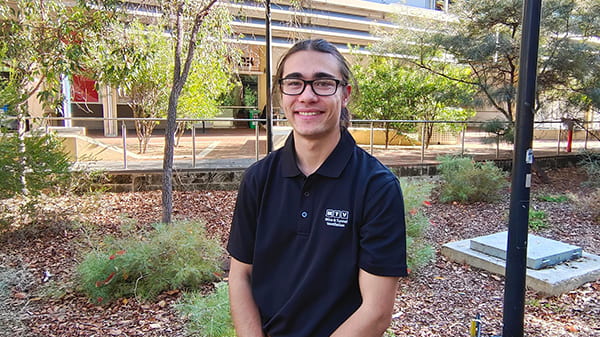
ECU was fantastic in combining theory and practical engineering
Being involved with the ECU Formula SAE team has been my most challenging but rewarding achievement so far. Formula SAE is a competition where university students design, build and compete in their very own Formula-style open-wheeled racing car. FSAE helped me connect with like-minded students, sharing our passions.
-
I was able to learn far more about engineering than would have been possible with only lectures
Studying engineering at ECU provided me the means to learn the theory in the classroom, but also to put that into practice in engineering labs, including building formula student cars in the motorsport lab. The hands-on exposure I had to the detailed engineering design cycle gave me a unique leg-up when looking for a job that most graduates do not have.

-
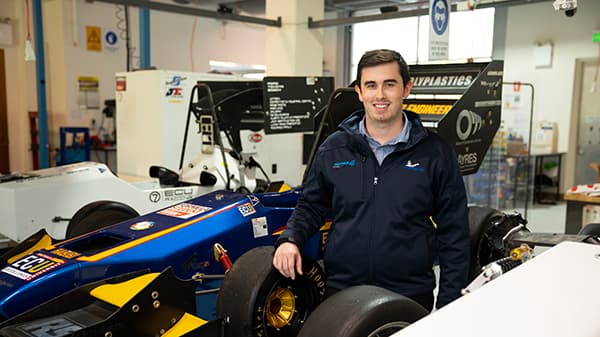
ECU's industry connections helped launch my career as an engineer
I have a huge passion for motorsports, so it made sense for me to study the only motorsports course in the southern hemisphere. And before I graduated, I was able to secure an amazing opportunity with Michelin Australia.
Quick guide to uni-speak
-
-
The Australian Qualifications Framework (AQF) is the national regulator of qualifications in the Australian education and training system. The AQF defines the essential characteristics, including the required learning outcomes, of the different types of qualifications issued across the higher education systems in Australia.
-
ATAR is the Australian Tertiary Admission Rank, the primary criterion for entry into most undergraduate university courses in Australia. The ATAR is a percentile score which denotes a student's ranking relative to their state-wide peers upon completion of their secondary education.
-
CRICOS is the Commonwealth Register of Institutions and Courses for Overseas Students. A CRICOS code is allocated to education institutions (like ECU) who are approved to recruit, enrol and deliver education to overseas students. Courses with a CRICOS code are available to international students who meet the entry requirements.
-
A major, or unit set, is your chosen area of in-depth study in an undergraduate course. It usually involves 8 units of study, or one-third of the units in a 3-year degree. Talk to your Student Information Office if you need help choosing a major subject.
-
Minors include between 4 and 6 study units in a specific discipline. Not all courses require you to complete a minor. Your minor subject doesn't appear on your printed degree (parchment), but is part of your academic transcript.
-
If you're enrolled in 3 or more units in a semester this is considered full-time study. To complete most 3-year degrees studying full-time you'll need to complete 4 units per semester, i.e. 24 units over 3 years.
-
-
-
If a course is available to study part-time you can generally expect it to take twice as long to complete as it would in full-time mode. Part-time students are enrolled in 1 or 2 units maximum per semester.
Note: International students who hold a student visa can only choose the full-time study option for our courses. This is to ensure the course is completed within the duration of the student visa.
-
Most courses start in Semester 1 each year, usually in the last week of February. Some courses can be started in Semester 2 (we call this mid-year). There's a week of Orientation before each semester to help you get used to uni life.
-
A lot of our courses start in Semester 2 each year, usually in the last week of July. We call this mid-year. There's a week of Orientation beforehand to help you get used to uni life.
-
We use a points system to make it easier for you to understand your study progress. Most Bachelors degree study units are allocated 15 credit points. If you're studying a 3-year full-time degree you'll need to successfully complete 360 credit points - that's 24 units x 15 points per unit.
-
These are compulsory units you have to successfully complete as part of your course.
-
An elective is a unit you choose to study that counts towards your course requirements, but isn't compulsory. For some courses we recommend elective units. In some situations, a course coordinator may approve an elective unit as a replacement for a compulsory one.
-
Quick guide to uni-speak
-
-
The Australian Qualifications Framework (AQF) is the national regulator of qualifications in the Australian education and training system. The AQF defines the essential characteristics, including the required learning outcomes, of the different types of qualifications issued across the higher education systems in Australia.
-
ATAR is the Australian Tertiary Admission Rank, the primary criterion for entry into most undergraduate university courses in Australia. The ATAR is a percentile score which denotes a student's ranking relative to their state-wide peers upon completion of their secondary education.
-
CRICOS is the Commonwealth Register of Institutions and Courses for Overseas Students. A CRICOS code is allocated to education institutions (like ECU) who are approved to recruit, enrol and deliver education to overseas students. Courses with a CRICOS code are available to international students who meet the entry requirements.
-
A major, or unit set, is your chosen area of in-depth study in an undergraduate course. It usually involves 8 units of study, or one-third of the units in a 3-year degree. Talk to your Student Information Office if you need help choosing a major subject.
-
Minors include between 4 and 6 study units in a specific discipline. Not all courses require you to complete a minor. Your minor subject doesn't appear on your printed degree (parchment), but is part of your academic transcript.
-
If you're enrolled in 3 or more units in a semester this is considered full-time study. To complete most 3-year degrees studying full-time you'll need to complete 4 units per semester, i.e. 24 units over 3 years.
-
-
-
If a course is available to study part-time you can generally expect it to take twice as long to complete as it would in full-time mode. Part-time students are enrolled in 1 or 2 units maximum per semester.
Note: International students who hold a student visa can only choose the full-time study option for our courses. This is to ensure the course is completed within the duration of the student visa.
-
Most courses start in Semester 1 each year, usually in the last week of February. Some courses can be started in Semester 2 (we call this mid-year). There's a week of Orientation before each semester to help you get used to uni life.
-
A lot of our courses start in Semester 2 each year, usually in the last week of July. We call this mid-year. There's a week of Orientation beforehand to help you get used to uni life.
-
We use a points system to make it easier for you to understand your study progress. Most Bachelors degree study units are allocated 15 credit points. If you're studying a 3-year full-time degree you'll need to successfully complete 360 credit points - that's 24 units x 15 points per unit.
-
These are compulsory units you have to successfully complete as part of your course.
-
An elective is a unit you choose to study that counts towards your course requirements, but isn't compulsory. For some courses we recommend elective units. In some situations, a course coordinator may approve an elective unit as a replacement for a compulsory one.
-
Do you have any questions about the Bachelor of Technology (Motorsports)?
The Important Things
Things you should know about if you're thinking about studying here.
Course Entry
There's more than one admission pathway into an ECU course. It depends on what you've studied already, or your work or life experience.
Fees & Scholarships
Course tuition fees can change, but we can give you an estimate of your costs. If you're eligible, a scholarship or student loan can help too.
Applying
Applying for a course is a fairly simple process, especially if you have scanned copies of qualifications, your resume or other paperwork, ready to upload.
ECU Experience
Starting a course is an exciting and sometimes daunting time, so we make a massive effort to ensure you get all the support you need to have a positive experience.