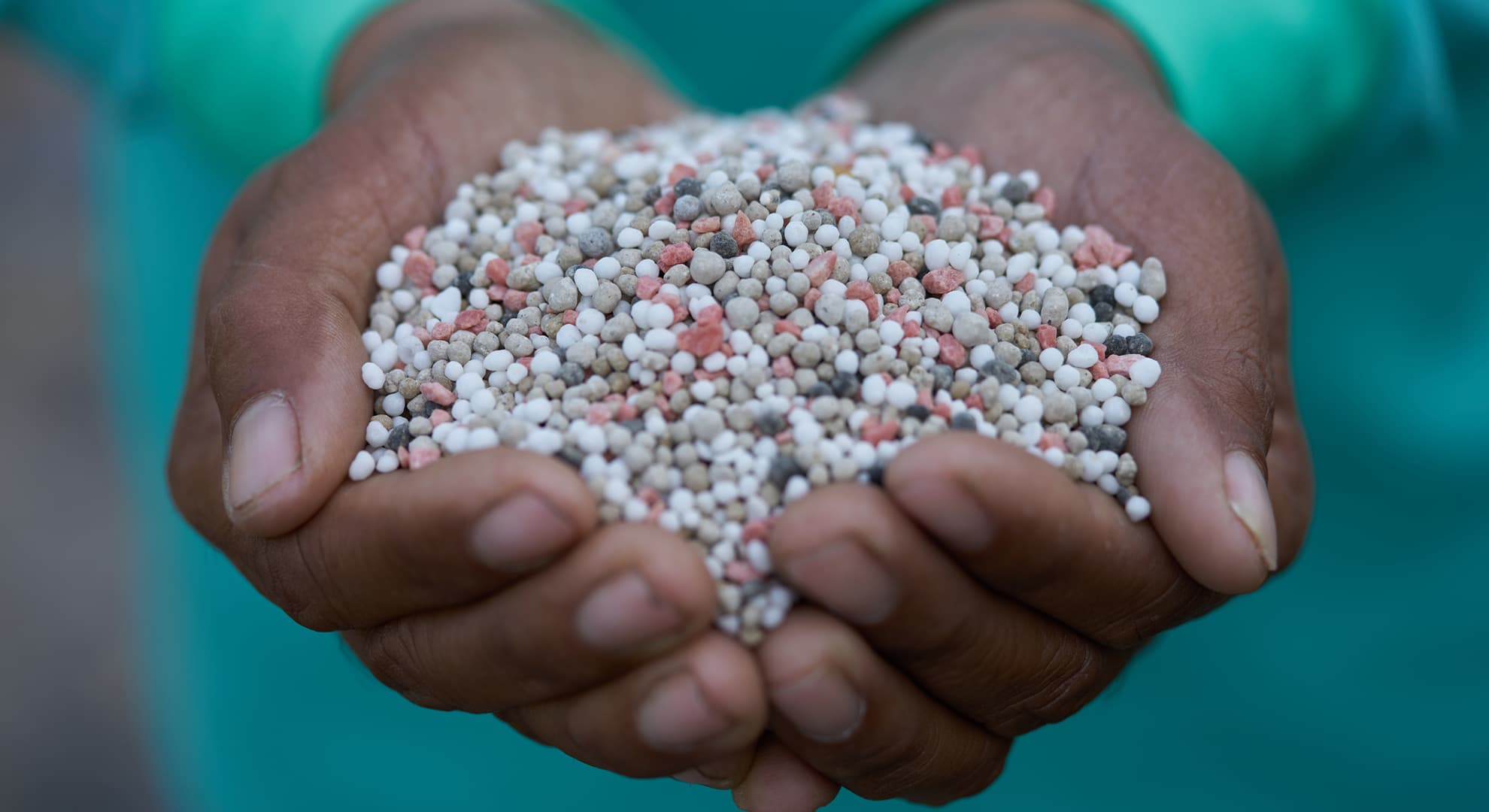
 Sulphate of Potash is a key fertiliser used for high-value crops like fruits, nuts, vegetables, tea and canola
Edith Cowan University's (ECU's) Mineral Recovery Research Centre (MRRC), led by Associate Professor Amir Razmjou, has been shortlisted for a prestigious Mining Magazine Award, in the Climate and Environment category, which recognises individuals and groups in the mining industry producing real-world technological solutions for achieving net zero.
The MRRC team is spearheading a novel technology advancing greener mineral processing. Funded by a $2.87 million Federal Government Cooperative Research Centres Projects (CRC-P) program, Professor Razmjou's group is partnering with Impact Minerals and CPC Engineering.
Sustainability
MRRC researchers have innovated a unique membrane-based mineral extraction and water recovery technology for the sustainable production of high purity alumina (HPA), a critical mineral in emerging industries, used in particular with semi-conductors and lithium-ion batteries. HPA also has useful by-products including Sulphate of Potash (SOP), a key fertiliser for high-value crops like fruits, nuts, vegetables, tea and canola.
The new membrane technology has direct impact for a broad range of mining and mineral processing-related projects. It leverages Western Australia's vast distribution of ephemeral salt lakes. Over millennia, salt lakes like the one used in Impact Minerals' Lake Hope project, located in the Goldfields–Esperance region about 500 km east of Perth, have formed into natural mineral concentrators, delivering feedstock, or raw materials, which are already finely grained and highly reactive, eliminating the need for the intensive drilling, blasting or grinding of traditional mining.
Net zero future
This cutting-edge technology can purify SOP and recover processed water with a fraction of the energy of conventional methods. By aligning the unique geochemistry of Lake Hope with the innovative membrane technology, the MRRC team is delivering high purity materials the world needs for a net zero future with the smallest possible environmental footprint.
The technology can also help Australia process more of its critical minerals here, in a cleaner and more responsible way.
Dr Mike Jones, Managing Director of Impact Minerals, anticipates that within five years the team could be in small scale production for HPA and SOP.
"I hope the technology can move from successful research and pilot work into real industrial use. Longer term, we hope this work helps support more modular, lower-water and lower-carbon processing systems for Australia's critical minerals sector," Professor Razmjou said.
He emphasises that the nomination for the Mining Magazine Award is a reflection of strong collaboration between the MRRC, Impact Minerals and CPC Engineering.
Projects like this need good science, but they also need industry input, practical engineering and a shared commitment to reducing environmental impact.
"Dr Mehdi Shirazi, our Senior Research Fellow, has played a key role in developing and integrating membrane technology into high-purity alumina production. He and our research assistant Nima Fakhralmobasheri also put a lot of effort into nominating MRRC for the award and contributed strongly to the success of the application," Professor Razmjou said.
"I have a team heavily busy with the process design as well as flowsheet development, and currently we are focusing on the production of the sulphate of potash as well as the main part of the process which is the high-purity alumina,"Ms Eugenia Phegan, Process Manager at CPC Engineering, explained.
The panel of judges, chaired by Mining Magazine editor Beth McLoughlin, examined over 100 entries across 13 categories.
"The quality of entries this year was exceptionally high in many categories. We were looking for evidence-based innovation and achievement in mining, and we found plenty of it," McLoughlin said.
View the full Mining Magazine Awards 2026 shortlist. Category winners will be announced in September.