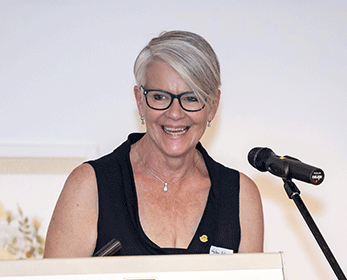
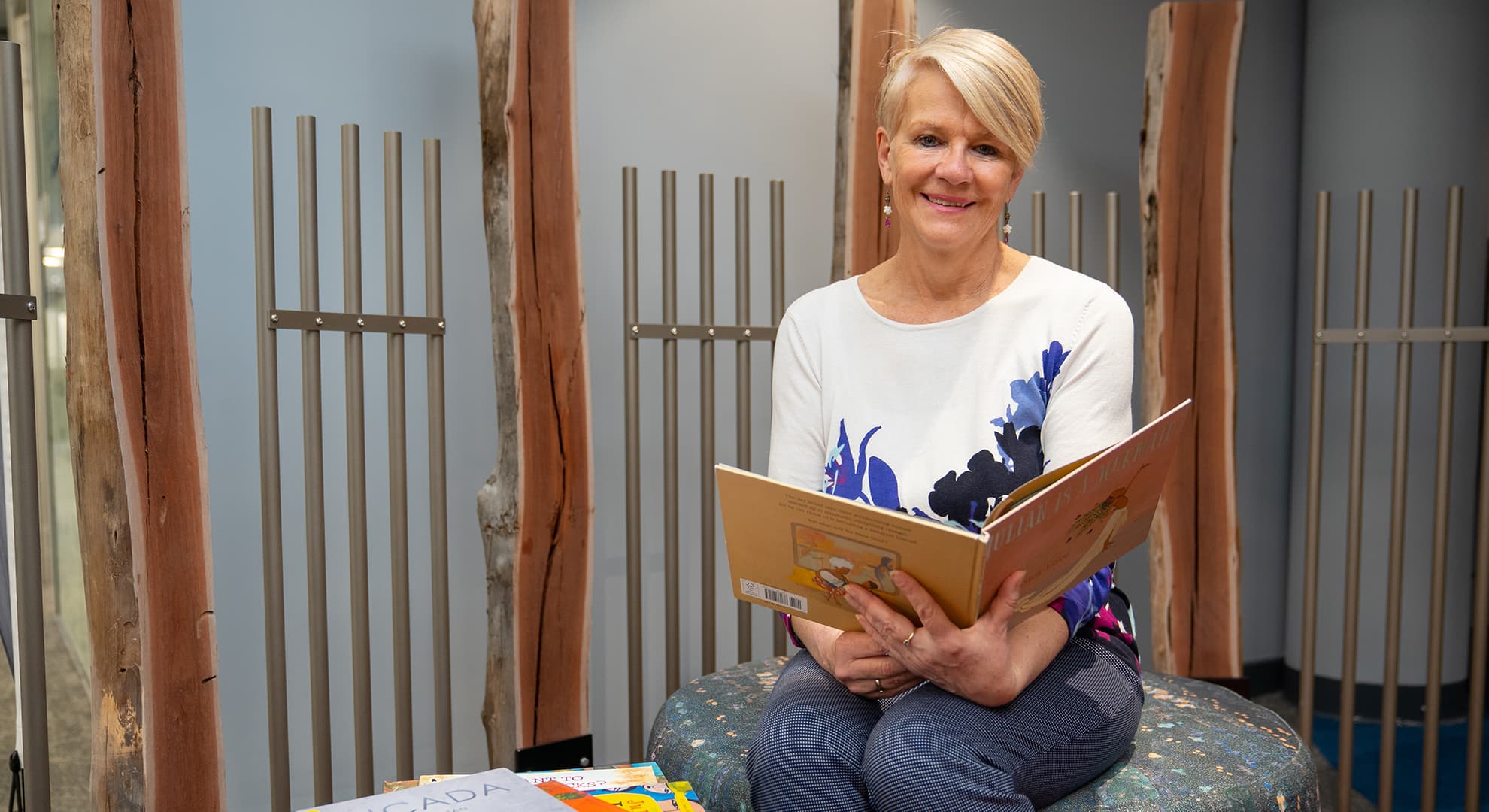
 Associate Professor Helen Adam
Here's a stat kept under wraps: by Year 9, disadvantaged children in Australia are four years and three months behind their advantaged peers in reading, on the same test used nationwide. The Mitchell Institute at Victoria University tracked 17 years of NAPLAN results and found this gap doesn't shrink as children move through school, it grows: from two years and three months at Year 3 to over four years by Year 9. The researchers were blunt: this isn't teachers or schools failing. It's the system.
You wouldn't know it from the way NAPLAN results are reported. The official line was "broadly stable", year-on-year differences "negligible". That hides the real trend: while the national average barely moves, the gap underneath widens every year. A struggling school isn't compared to the national average either. It's compared to other "statistically similar" schools, and if it does about the same as the rest of that group, the report card says: on track. No parent would accept "about as poor as similar schools" as a report on their own child. So why do we accept "broadly stable" as the national verdict?
Postcode decides all of this, starting from birth: whether there are books at home, a school library, and a childhood where the stories on the shelf look like your life. National and international evidence consistently links a school library and qualified teacher librarians to stronger reading results, yet Australia doesn't even mandate that schools have a library – and disadvantaged schools are the least likely to have one. No amount of brilliant teaching can fix that on its own, and teachers are often held responsible for a gap that opens long before a child ever sits in their classroom. Postcode should never determine a child's access to quality educational resources and teaching. But while we keep ignoring what postcode does determine, we're not giving even the best teaching a real chance to work.
The Better and Fairer Schools Agreement (BFSA) is a genuine step in the right direction, the first funding deal in years to put real money behind closing this gap. But follow the $16 billion federal funding for BFSA and the reforms all land in here: phonics checks, numeracy checks, evidence-based instruction and catch-up tutoring. Attendance gets a target. Libraries and books don't even get that. The evidence for explicit reading instruction is strong, and every child deserves it. The evidence for what surrounds a child: freedom from the daily pressures of poverty, access to a library, a community with the infrastructure to back them, is just as strong. It simply isn't in the room when the money gets decided.
Explicit teaching thrives in fertile ground: a well-resourced school, a stocked library, a family not stretched thin by poverty.
Take the same excellent teaching and drop it into a remote school without any of that, and it has far less to grow in. Many remote schools have already had millions upon millions poured into instructional interventions, only to end up tracking, at best, in line with other similarly disadvantaged schools, the very "on track" that means nothing. This year's NAPLAN results show exactly that: about 70% of students in major city schools rated exceeding or strong in reading and numeracy, compared with just 23% in very remote schools. More explicit instruction is never going to close that gap on its own.
The earliest, cheapest place to start is before a child ever sits a NAPLAN test, and we already know how to do it. Dolly Parton's Imagination Library gifts a book a month books to children from birth to five years of age. A 2025 study of 86,000 families found children showing stronger literacy skills after receiving just 10 books, and in Australia, every $100 spent returns close to $990 in welfare savings and lifetime earnings. A 10:1 return, still dependent on philanthropy rather than government. Kindytxt, a WA program that sent kindy parents literacy tips by text, co-designed with teachers and librarians, worked too. It's no longer funded. Even HIPPY, one program government did back, across 100 communities, now states on its website there's no more money to grow it further. The pattern repeats: find what works early, fund it sporadically, then stop.
A four-year gap won't close with quality instruction alone, and it won't close with books, libraries and support for communities alone either. It closes when we fund all these together, not one at the expense of the others. "Keeping pace with other disadvantaged schools" is not success.
Right now, we're funding half the evidence and calling it a plan and ignoring the half that can overcome disadvantage. We do that at our peril.
This opinion piece was published in the Herald Sun.
Helen Adam is an Associate Professor of Literacy in the School of Education at Edith Cowan University, President of the Primary English Teaching Association of Australia (PETAA), Churchill Fellow 2022, member of the First Nations Expert Reference Group for AERO and member of the Early Childhood Professorial Advocacy Council (ECPAC). She is the author of 'Creating Equitable Literacy Learning Environments: A Transformative Model' published by Routledge, which examines ways in which explicit literacy instruction can challenge bias and promote equity across diverse contexts.