
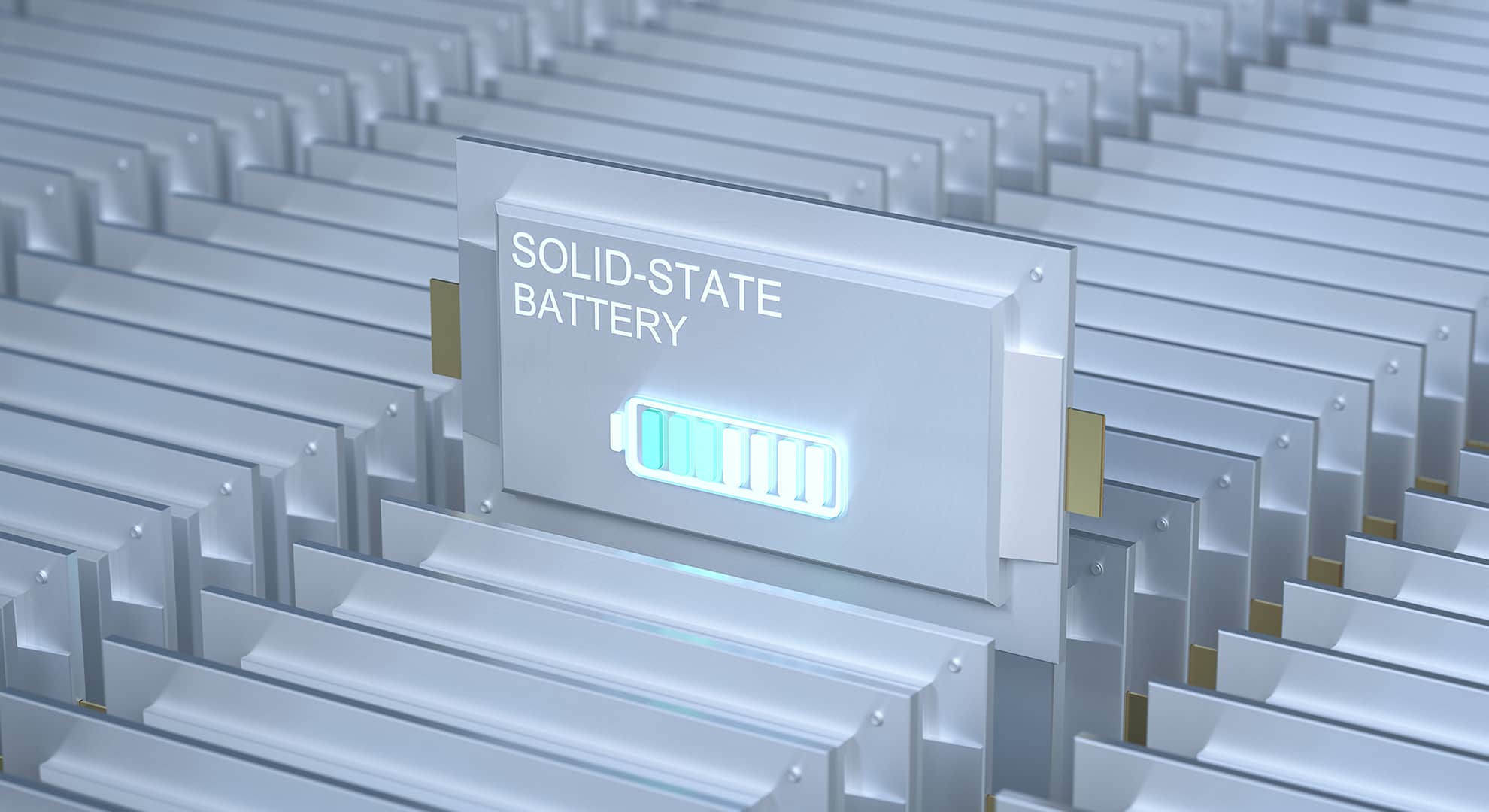
 One big challenge for solid-state batteries is the interface.
Researchers at Edith Cowan University (ECU) are working on ways to make solid-state batteries more reliable with the help of artificial intelligence (AI) and machine learning.
In her recent research, Interface engineering and safety in solid-state batteries: Advancing from human-centered insights to AI-driven innovations, PhD candidate Ms Elnaz Karimi noted that solid-state batteries promise safer, longer-lasting and more efficient performance compared with current lithium-ion batteries.
However, one big challenge for solid-state batteries is the interface: the area where different battery materials (cathode, anode, and electrolyte) meet.
If the interface isn't well-designed, the battery can develop problems such as lithium dendrites which cause short-circuits, higher resistance or even safety risks.
"Improving this interface is essential to make solid-state batteries reliable. Good interface engineering of solid electrolyte helps the battery move energy (ions) more easily, stay mechanically stable and avoid overheating.
"AI and machine learning are now helping us to do this faster. These tools can predict how materials will behave, identify better interface designs and spot potential failure points before they occur," she said.
Ms Karimi explained that by feeding key factors like pressure and temperature into AI and machine learning models, researchers can predict how efficiently different components particularly electrolyte of a solid-state battery will perform.
Together, strong interface engineering and AI-powered insights are key to making solid-state batteries safe, durable and ready for large-scale use from electric vehicles to grid energy storage, said ECU lecturer Dr Muhammad Azhar.
Dr Azhar noted that while a lot of research has been done on solid-state batteries in laboratories, work was needed on bringing these batteries into large-scale production. Australia has a strong focus on local battery manufacturing.
"Work is already underway in this arena, both in China and Europe. A lot of manufacturers are working towards making solid-state batteries at large scale but also trying to address the interface issue."