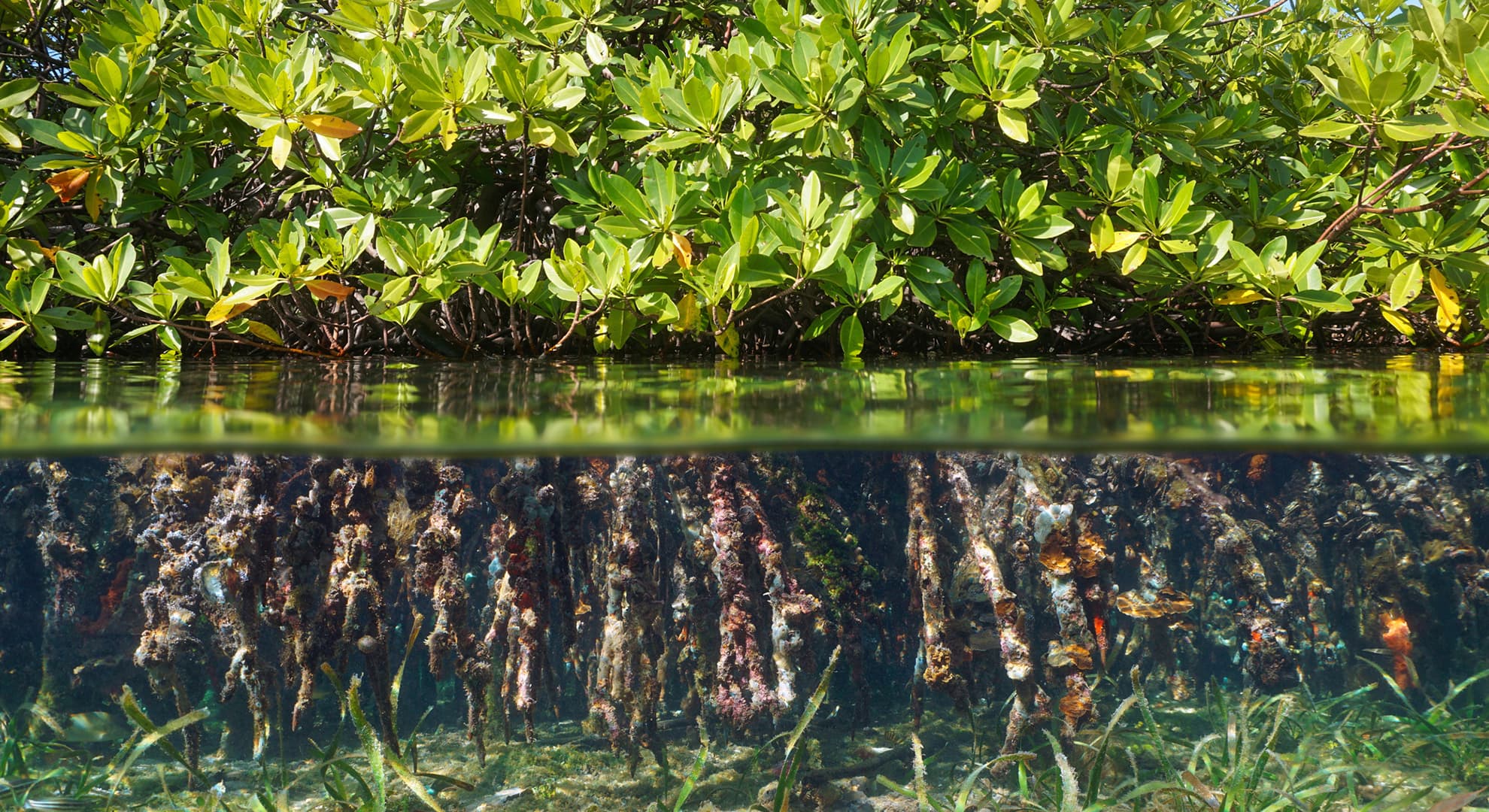
 Blue carbon ecosystems such as mangroves, seagrasses and tidal marshes are very efficient in accumulating and storing organic carbon, often effectively reducing the amount of carbon dioxide in the atmosphere. Credit: iStock Damocean.
A major new international study warns that critical scientific and practical gaps are slowing the use of blue carbon ecosystems (BCEs) in global efforts to tackle climate change.
Led by a team of international researchers - including Professor Pere Masque and Dr Anna Lafratta from Edith Cowan University's Centre for Marine Ecosystems Research in the School of Science - the study identifies the most urgent priorities needed to scale credible, equitable and effective blue carbon conservation and restoration worldwide.
The paper, published in Nature Ecology & Evolution, sets out a global agenda to accelerate progress in this rapidly developing field.
BCEs, such as mangroves, seagrasses and tidal marshes, are very efficient in accumulating and storing organic carbon, often effectively reducing the amount of CO2 in the atmosphere.
Despite the significant potential of blue carbon to contribute to climate mitigation, only around 20 per cent of eligible countries currently include blue carbon in their National Inventory Reports, representing a substantial gap in the opportunities offered under the Paris Agreement.
Advances in measuring carbon stocks and fluxes in coastal and marine ecosystems have made it increasingly feasible to integrate blue carbon into national climate strategies, greenhouse gas inventories, and emerging carbon markets. This progress has driven global interest and accelerated research efforts, strengthening the links between science, policy, and on-the-ground action.
The paper, titled Priority questions for the next decade of blue carbon science, is intended as a guide for researchers, practitioners and policy makers facing the challenge of the need for robust evidence to underpin effective governance of BCEs as sites which, through conservation and restoration, have the potential to offset a further 1-3 per cent of global greenhouse gas emissions.
"The field has shifted rapidly toward implementation, governance and equity, and bringing a large international group to agreement on what matters most proved both difficult and deeply worthwhile," First author Professor Peter Macreadie from Royal Melbourne Institute of Technology (RMIT) said.
Developed out of a priority-setting exercise, the paper identifies ten questions that define the future direction of blue carbon science and involved researchers from 15 institutions representing a broad range of expertise and knowledge, including early career researchers, senior academics, and indigenous peoples' contributions.
Speaking of the breadth of collaboration and its importance, co-author Professor Masque said gathering 30 scientists from across the globe in Vienna in November 2023 was made possible with the support of the International Atomic Energy Agency (IAEA).
"This was essential to establish the GO-BC Science Technical working group and combine our diverse expertise, fostering an environment where interdisciplinary ideas could thrive, this conceptual synthesis allowed us to transcend disciplinary silos and define a truly international roadmap for blue carbon," Professor Masque said.
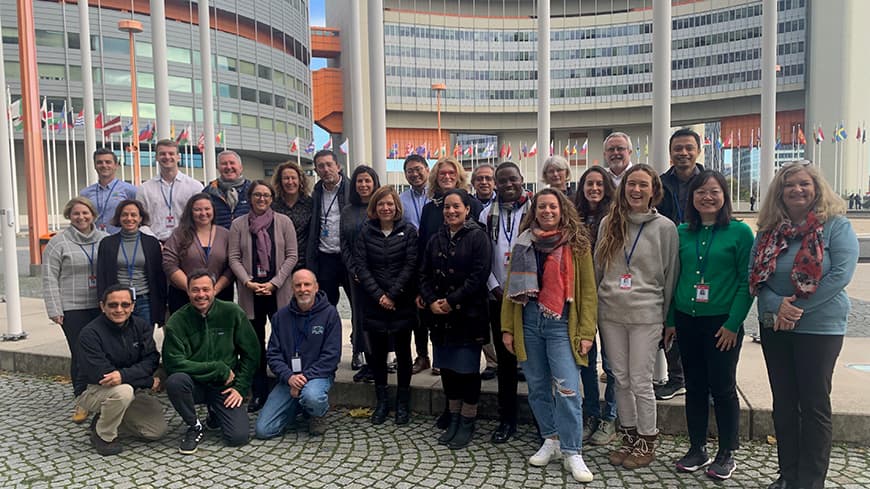 Scientists from around the globe gathered in Vienna in 2023 to combine their expertise.
A panel of international experts identified the top ten questions shaping the future of blue carbon, highlighting the push to balance scientific rigor with practical action. Out of 116 submissions, the highest-ranked question focuses on managing coastal ecosystems at scale while supporting local livelihoods.
Co-author Dr Hannah Morrissette from the Smithsonian Environmental Research Center said conserving blue carbon ecosystems for the livelihoods of coastal communities is not only a scientific achievement, but a universal responsibility of those in the blue carbon space.
"Merging traditional and academic ecological knowledge allows us to manage these ecosystems with a scientifically robust strategy based on local context for maximum effectiveness," Dr Morrissette added.
Professor William Austin from the University of St Andrews said the study brought together blue carbon experts from across the world as part of a major global initiative - the United Nations Ocean Decade of Ocean Science for Sustainable Development.
"By today, we are just past the mid-point of the Ocean Decade, with the need for multilateral cooperation in science and a vision for the protection and restoration of the world's blue carbon habitats more urgent than ever."