
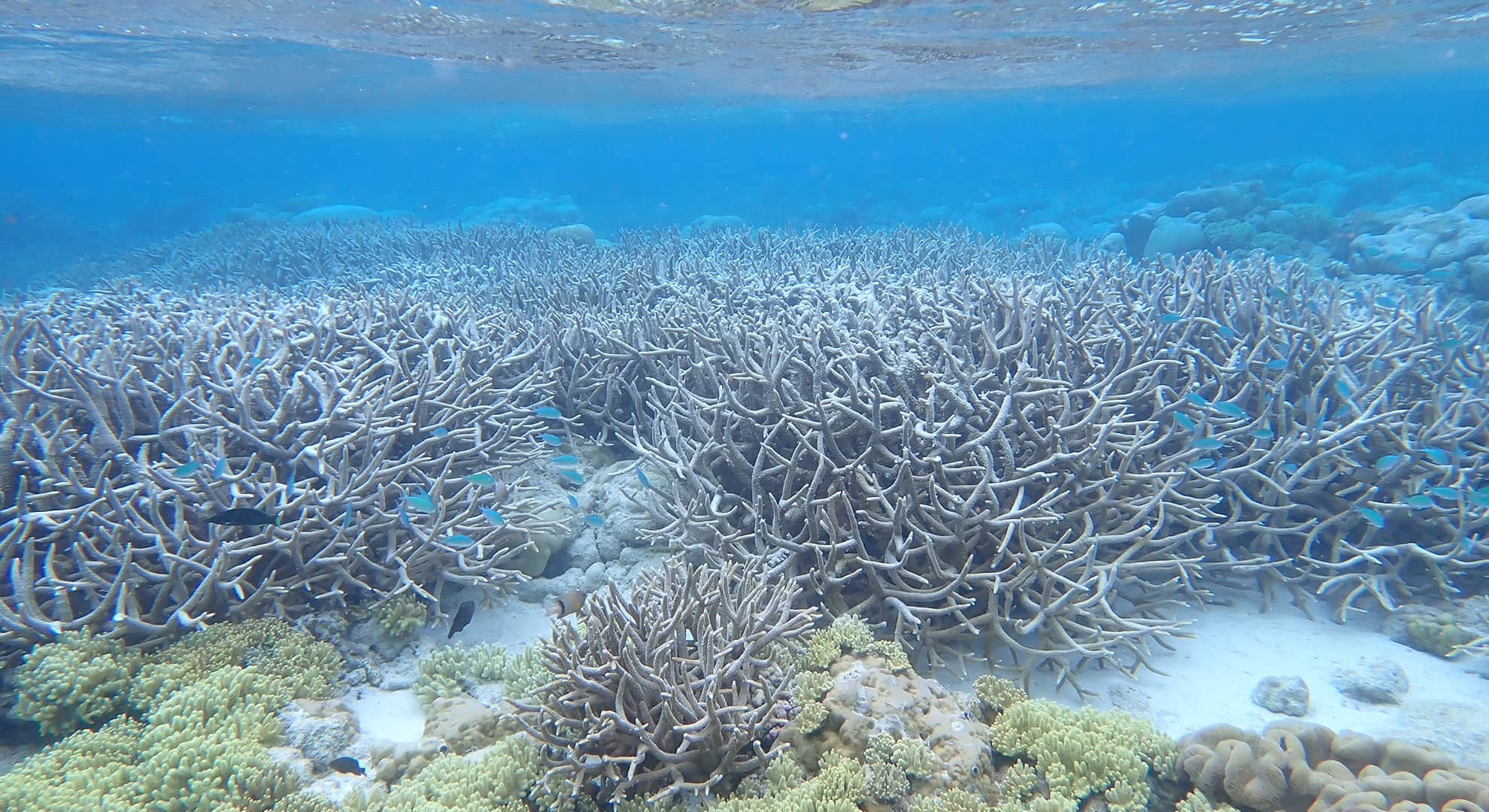
 The study also highlights the hidden historical importance of Australia's northwest reefs. Credit: Alexandre Siqueira
New research from Edith Cowan University (ECU) has revealed that the waters between Australia and Southeast Asia were once a hotspot for new and mammoth coral reefs – laying the foundations for the extraordinary diversity of marine life we see today.
Led by Dr Alexandre Siqueira, Vice Chancellor's Research Fellow with ECU's Centre for Marine Ecosystems Research and recipient of the Australian Research Council's Discovery Early Career Researcher Award (ARC DECRA), the study shows the largest expansion of coral reefs in the past 100 million years happened 20 to 10 million years ago in this region – now the world's most biologically-rich marine area.
"Coral reefs are among the most biodiverse ecosystems on Earth, supporting around a quarter of all marine species while covering less than one per cent of the oceans," Dr Siqueira explained. "Yet how this diversity formed has remained unclear.
"This study uncovers a turning point deep in Earth's history – a time when reefs didn't just grow, but magnified on a scale far beyond anything we see today."
Working with a team of international researchers looking at three different sources of evidence – geological records, fossils and genetic data – Dr Siqueira said the research showed changes in environmental, biological and tectonic conditions about 20 million years ago promoted the dramatic expansion of coral reefs across the region – now known as the Indo-Australian Archipelago.
"These independent lines of evidence allowed us to pinpoint when and where modern reef biodiversity began to take shape," he said. "There was a specific point in time when the size of coral reefs increased significantly, and that happens to coincide with the origin of many lineages of corals across different growth forms that we see today, but also some really iconic fish lineages, such as parrotfishes.
"As reefs grew larger, they likely created new habitats and ecological opportunities, allowing species to evolve and diversify."
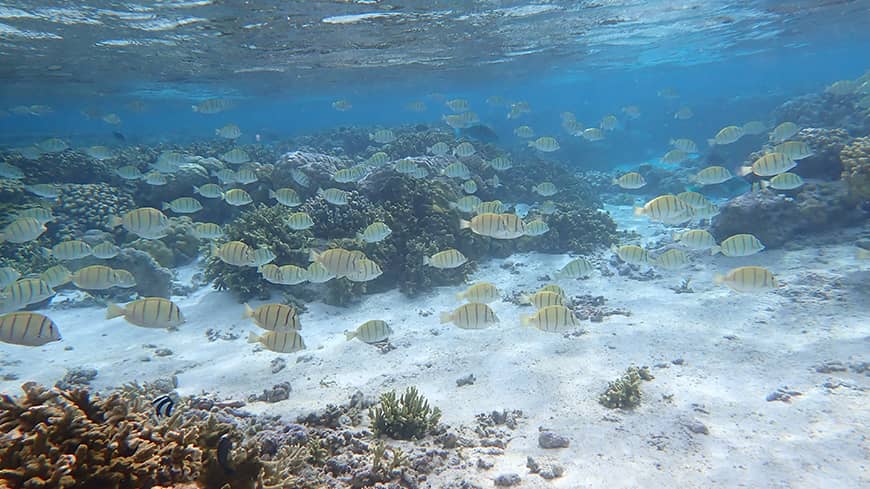 Credit: Alexandre Siqueira
Remnants of a colossal reef in northwestern Australia
The ancient network of reefs has been dubbed as the 'Great Indo-Australian Miocene Reef System'.
Dr Siqueira said surprisingly, the region where some of this expansion occurred is not where the largest reefs are found today.
Instead, reefs off northwestern Australia – including Ashmore Reef, Scott Reef, and the Rowley Shoals – may be remnants of what was once one of the largest reef systems to have ever existed.
"Previous geological work has shown that this ancient west Australian barrier reef rivalled the extent of the present-day Great Barrier Reef," Dr Siqueira said. "The new findings go further, suggesting individual reefs within this system may have been far larger than any modern reef.
"In fact, the roots of modern marine fish and coral biodiversity may lie in this unexpected place off Australia's west coast. Over millions of years, biodiversity spread and accumulated elsewhere, particularly across the Indo-Pacific.
"This highlights the hidden historical importance of Australia's northwest reefs – a region that may have played a central role in shaping the diversity of life across today's tropical oceans."
History rewritten
Dr Siqueira said while there are still uncertainties, there is now a clearer picture on reef evolution.
"It adds one more piece of evidence to the puzzle on how coral reef systems as a whole evolved," he said.
"There is a lot of research that has been done to show this specific point in time was special for some reason – some hypothesise that was the time in which the tectonic plate from Australia was moving northwards, and when it reached Southeast Asia it created a lot of shallow waters that are ideal for the development of coral reefs.
"But what we are adding to the story is that coral reefs were significantly larger at that point in time, and that part of history continues to shape life in our oceans today."
The rise and fall of the world's greatest marine biodiversity hotspot was published in Science Advances.