
 Are you ready to enhance your career prospects or make a complete career switch?
In reality, there are more than five signs that someone has outgrown their job.
We're talking about humans afterall.
But here are five common signs of this dilemma we came up with:
- You've hit a promotion/growth barrier in your current role
- Your work is no longer challenging you
- You propose new ideas, and they always get shot down
- It's time to do something you always wanted to do
- Your current workplace isn't providing you enough work/life balance
You may even say "Yes" to all five!
Whatever your scenario, we hear you.
Better still, we might have some answers to help you move on.
Finding your ikigai
Let's start here.
Ikigai is not a made-up word.
It's a Japanese word that means 'reason to jump out of bed in the morning'.
Or 'reason to live' even.
It's a place where your needs, ambitions, skills and satisfaction meet.
It describes four elements of your working life.
It looks like this...
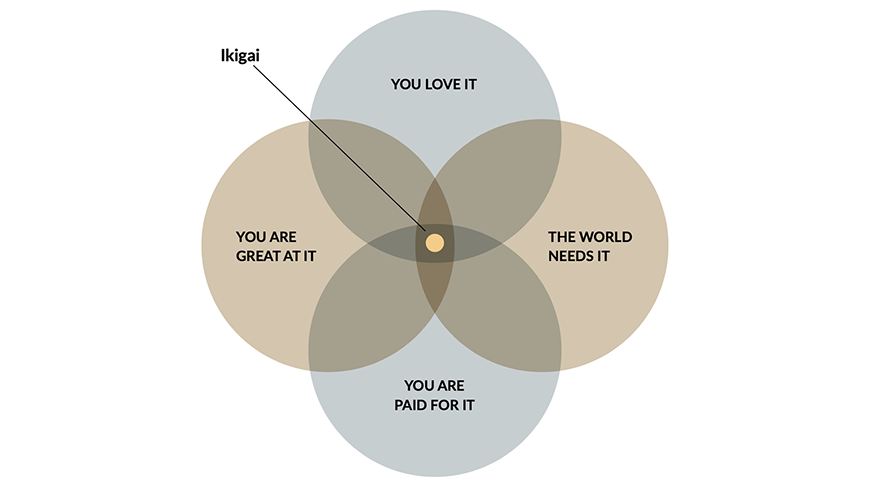
Ikigai is the sweet spot where all these things intersect.
Ideally, your job or career lands you there.
However, if you've outgrown your job, that sweet spot will remain elusive.
Switchers and enhancers
But all is not lost.
If you've been working for a while now, regardless of whether you have a university degree or not, you have skills.
Some skills relate to the work you do, e.g. the technical skills.
You also have general skills, sometimes called 'soft skills', e.g. teamwork, time management, problem solving, etc.
Your challenge is to decide whether to enhance what you already do to create more opportunities, e.g. through further study.
Or decide to switch direction altogether.
You might discover another field or a related field where your skillset gives you a chance to switch over.
For example, you might a trained nurse who loves working in healthcare and caring for people, but you find that your skills give you a head start into a career you’ve often thought about – as a paramedic.
Or there might be a particular element of your job that you enjoy, so leaving is an opportunity to home in on a specialisation.
Michaela's career switch – from graphic designer to nutritionist (1 min 16 sec)
Postgraduate study is a good place to start
This is a common avenue taken by switchers and enhancers.
Postgraduate study can help you add to your skills or specialise through Graduate Certificate courses that take only 6 months to complete (full-time) and can be studied online.
You can also study a postgraduate course to completely switch careers.
For example, some Diploma courses are designed for people who've decided they want to become teachers after having a completely different career.
Whatever your situation, if you haven’t already explored our postgraduate courses, we recommend you do so as a useful starting point.
And good luck finding your ikigai.