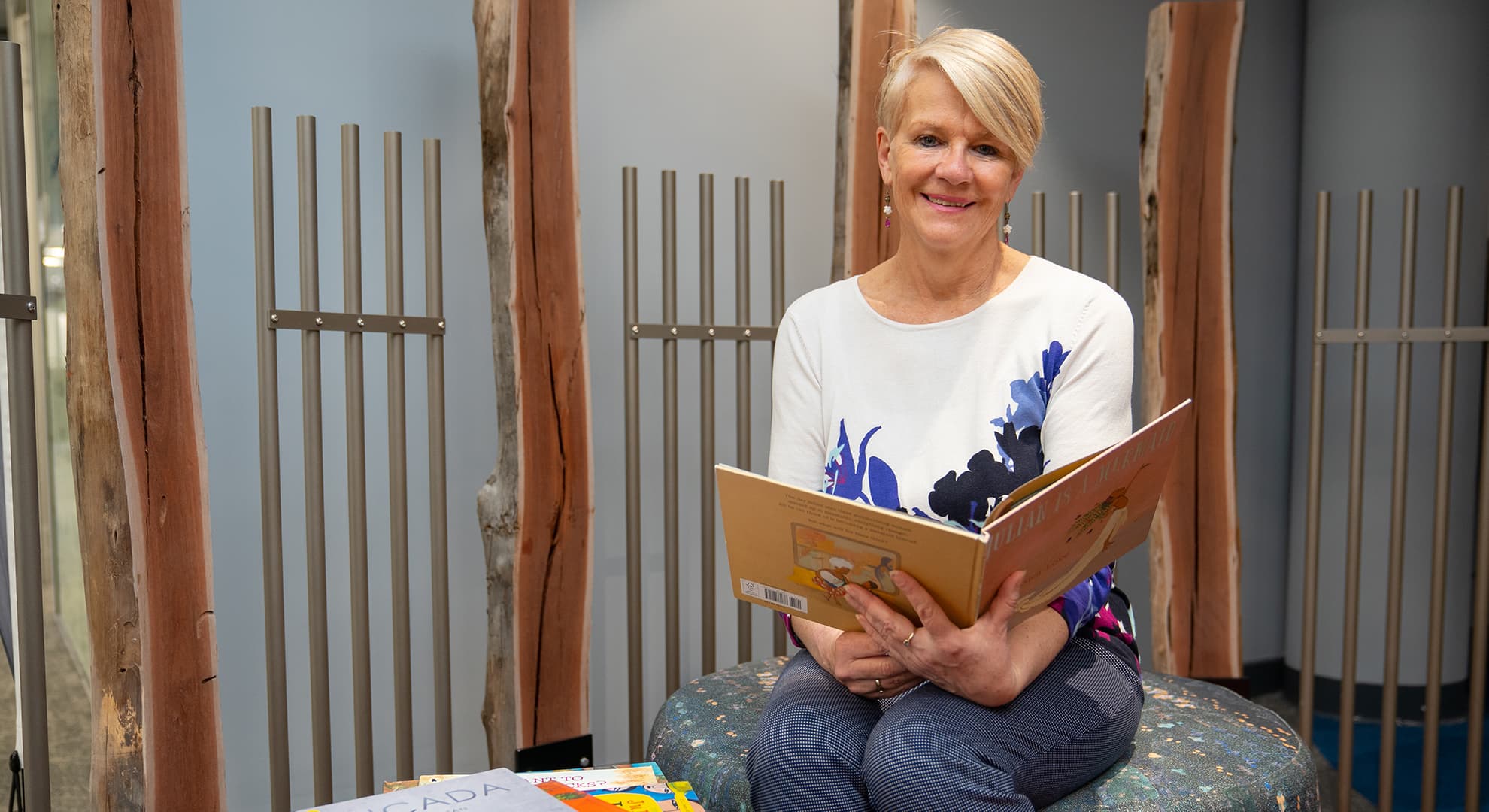
 Associate Professor Helen Adam said books are safe entry points to talk about difference, fairness, belonging and antiracism.
The terrorist attack at Bondi Beach was a brutal reminder that unchecked prejudice can spill into violence. This moment demands we look squarely at how we teach respect, safety and dignity to the next generation. As schools prepare to welcome students back in 2026, we know teachers already do extraordinary work building inclusive, caring environments. Antiracist education doesn't replace that work - it deepens it. It gives teachers and parents practical tools to name racism, challenge stereotypes and grow empathy day by day.
Australia has foundations to build on. The Australian Human Rights Commission launched a National Anti-Racism Framework in November 2024, setting out recommendations across education, law, workplaces, media and more. Civil society groups have urged the government to fully fund and implement it. But, while policy is promising, children's learning can’t wait.
The stakes are high. Bondi showed hatred and racism at its worst. Peer-reviewed research estimates racial discrimination costs Australia approximately $37.9 billion annually through mental health impacts, with similar figures for queerphobia. That's a cost borne by all of us - lost wellbeing, lost productivity, lost trust. And attitudes form early. Research shows infants begin to prefer familiar, "own-race" faces by around three months - evidence that exposure shapes perception from the start. That's not destiny. It's an opportunity: early, intentional conversations can grow understanding, fairness and empathy before bias hardens.
So, what can teachers and parents do now, without waiting for new programs or budgets? Use children's books as a practical, immediate tool. Books are safe entry points to talk about difference, fairness, belonging and antiracism. The reading itself isn't the lesson - the thinking we model and the questions we ask are.
Teach books as "mirrors" and "windows"
Help children recognise that some books are mirrors - stories where they see their own lifestyles - while others are windows into how others live. When I visited classrooms during my Churchill Fellowship, Year 3 students used this language daily. They identified who was present and who was missing, and they noticed when classmates were invisible in curriculum materials. Young readers grasp this quickly; it gives them a simple frame for talking about representation and fairness.
Choose books strategically
Pick stories where diverse characters are central, not tokens. Prioritise authenticity - books by authors from the communities they're writing about. Balance books that name discrimination with books that show everyday joy: kids celebrating, problem-solving, being brave. This helps young readers see peers as whole people, not as "issues."
Ask different questions
Move beyond "What happened?" Try:
- "Who do we see here? Whose stories are missing?"
- "Is this a mirror or a window for you?"
- "Is this story fair? Does it show people the way they really are?"
These questions build the habit of noticing and thinking critically—skills that travel well beyond the page.
Create brave, caring spaces for hard conversations
Children notice differences—race, religion, family structures, abilities, languages, gender expression—and they ask about them. That's not a problem. It's a learning moment. In research with international colleagues, Jewish children compared their diverse Hanukkah traditions. Those conversations gently dismantled the idea that any community is a monolith. From the start, this helps children understand there is no one "right" way to be Jewish, Muslim, Aboriginal or any other identity.
Model critical thinking about older texts
When you hit stereotypes - even in classic books—name them. Explain that authors make choices about who is shown and how. Sometimes those choices are limited or inaccurate. Treat these moments as media literacy, not moral panic. Children can hold two truths: a book can be beloved and biased.
Invite children's and families' knowledge
Open the door for students to share books and stories from home. Children can become knowledge-leaders when teachers invite them to teach classmates about diverse cultural and family practices. These moments transform engagement and confidence and honour the expertise already present in the classroom.
For teachers this approach doesn't add a new unit. It threads through what you already do across the curriculum. A book at the right moment. A better question. A quick "mirror or window?" check. Ten minutes becomes a habit; habit becomes culture.
If you are a parent or carer, ask your child's school for stories that reflect a range of families and identities. Local libraries and bookshops in Perth carry excellent Australian picture books and junior fiction that meet this brief. At home, make a simple rule: for every "mirror," choose a "window" and remember that a mirror for some is a window for others.
Will books alone fix racism? Of course not. But books are the tool most homes and classrooms already have or can access. And when paired with intentional conversation, they change minds. More importantly, they grow the language and courage children need to ask thoughtful questions, recognise unfairness and show respect.
After Bondi, urgency is warranted. Naming antisemitism matters. Naming racism matters. Naming Islamophobia, anti-Palestinian racism, queerphobia, misogyny and ableism matters. Schools can lead in ways that are age-appropriate and hopeful. Antiracist policy will come. In the meantime, the work happens in everyday interactions between teachers, parents, children and books.
One book. One conversation. One child at a time. That is how we build the fairer future all Australian children deserve.
This opinion piece was published in The West Australian.
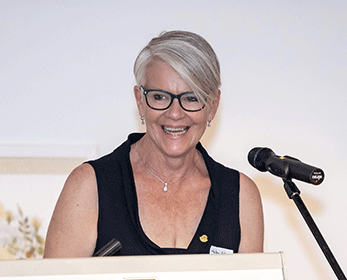
Helen Adam is an Associate Professor at Edith Cowan University, President of the Primary English Teaching Association of Australia (PETAA), Churchill Fellow 2022, member of the First Nations Expert Reference Group for AERO and member of the Early Childhood Professorial Advocacy Council (ECPAC). She is the author of 'Creating Equitable Literacy Learning Environments: A Transformative Model' published by Routledge, which examines ways in which explicit literacy instruction can challenge bias and promote equity across diverse contexts.