 iStock: SeventyFour
A new research project at the Western Australian Academy of Performing Arts (WAAPA) is exploring how drama education can support the wellbeing and development of young children.
Edith Cowan University (ECU) PhD candidate Ceri Nordling, a teacher, drama educator and WAAPA alumna, is investigating how creative drama activities can help children aged three to twelve build confidence, communication skills and emotional resilience.
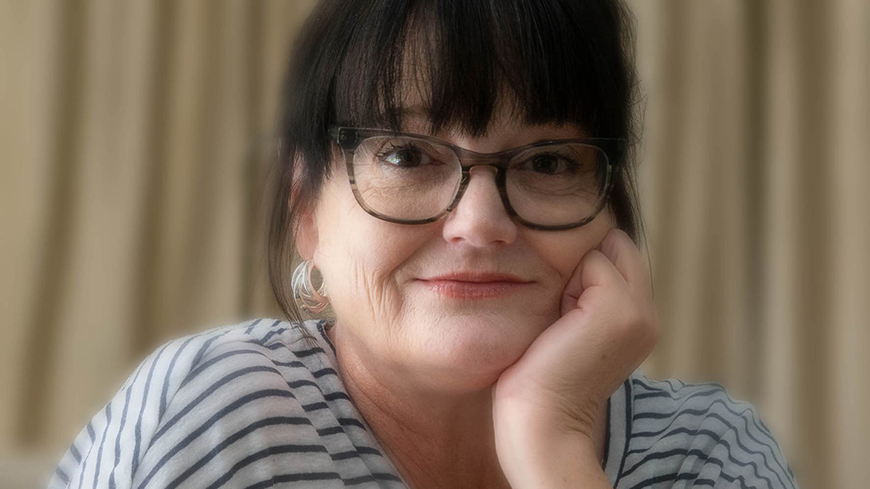 WAAPA PhD candidate Ceri Nordling
Ms Nordling said the inspiration for her PhD project, titled "Drama makes me happy", came from multiple moments in the classroom when young students reflected on their joy of a drama lesson in drawings.
"I have numerous pictures of our drama classes drawn by children proudly showing me how happy it made them feel. However, one drawing and moment stayed with me," Ms Nordling said.
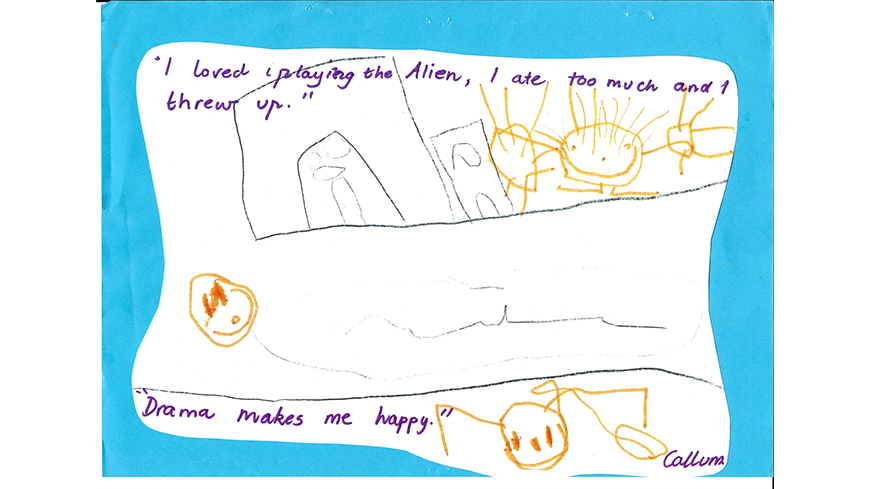 A drawing from one of Ceri Nordling's students depicting how drama makes them feel.
"Children consistently tell me drama is the part of school they love most – the part that makes them feel happy, confident and connected."
Now undertaking her PhD through WAAPA at Edith Cowan University (ECU), Ms Nordling's research explores how teachers and teaching-artists can harness drama's "innate power" to support children's holistic wellbeing in both schools and community arts settings.
Her project links drama education to the personal and social capability identified in the Australian curriculum as a key 21st-century skill, which helps students develop the knowledge and behaviours needed to thrive in life and work.
"Drama is so much more than acting or performing plays," Ms Nordling said.
"Through play-building, improvisation, movement and ensemble work, children can develop confidence, communication, empathy and critical thinking. These are life skills that support their wellbeing now and into the future."
Drawing on her background as a classroom teacher, specialist drama teacher and arts manager, Ms Nordling said the research aims to strengthen understanding of drama's wider value beyond the stage.
"Families often tell me drama is the only part of school their children talk about at home," she said.
"I want to better understand why drama has such a powerful impact so we can advocate for more creative learning experiences in schools and communities."
The research combines interviews with educators and teaching-artists with participatory action research, a collaborative method that involves practitioners working together to design and test practical approaches to drama teaching.
Ms Nordling has already conducted interviews with early childhood educators, classroom teachers and community drama practitioners, and is now inviting more teachers and teaching-artists to participate.
As part of the project, she will run a series of professional development workshops at ECU's City Campus during the school holidays to explore how drama can support children's wellbeing in practical classroom and community settings.
The workshops will be held on:
- Saturday 18 April (9am–3pm)
- Saturday 11 July (9am–3pm)
- Saturday 3 October (9am–3pm)
Participants are invited to attend at least two sessions to help build an evolving community of practice.
"This research is about working with educators and artists to develop practical tools they can actually use," Ms Nordling said.
"Ultimately, I hope to create a program and resources that help teachers and teaching-artists use drama as a creative, playful way to support children's wellbeing."
Teachers and teaching-artists interested in participating in workshops can register their interest via the project's expression of interest webpage or contact Ms Nordling direct at c.nordling@ecu.edu.au.