
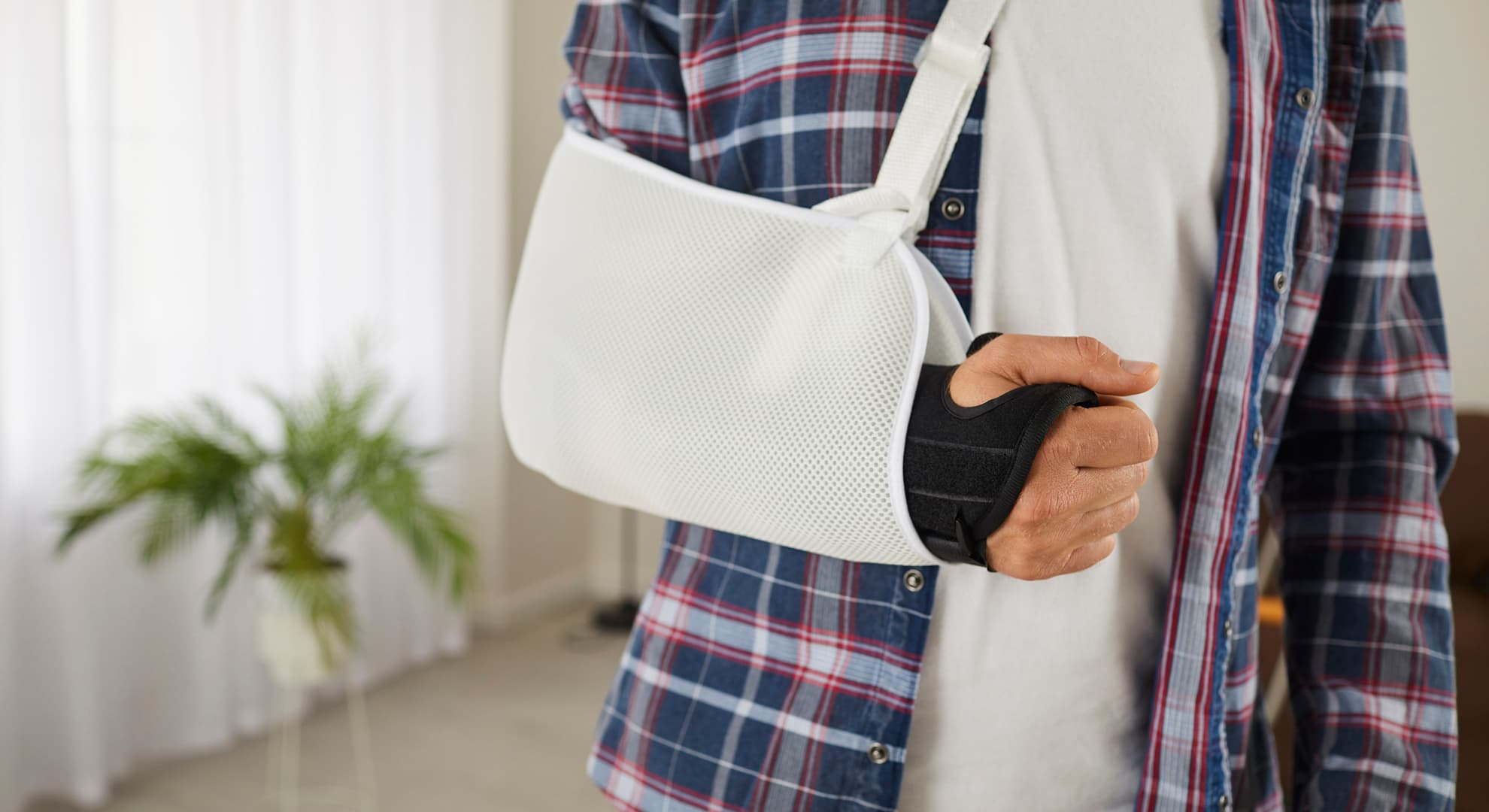
 3D Printed bone plates may help breaks heal faster. Image credit: iStock - Dobrila Vignjevic
New technology could potentially enable badly broken bones to heal stronger and faster, thanks to new research at Edith Cowan University (ECU).
Engineering students at ECU's Centre for Advanced Materials and Manufacturing have taken a big step towards replacing metal plates, traditionally used in surgery to stabilize fractures, with a lighter, smarter and more bone-friendly alternative.
The plates are made from carbon fibre and polylactic acid - but it's the specially engineered internal lattice patterns that could help accelerate healing.
Created with high resolution 3D printing, the lattice enables bone plates to expand sideways when stretched and contract when compressed, so stress is distributed more evenly.
"Conventional titanium and stainless-steel plates are far stiffer than natural bone. This can cause the plate to take most of the load, leading to delayed healing and weakness in the muscles and bones," PhD Engineering Student Ani Daniel said.
The plates were subjected to rigorous three point bending and compressive testing.
"The architecture of a bone plate can be just as important as the material it's made from," said Ani.
"By engineering the internal structure, we can design implants that support healing bones rather than overpowering them."
The customised plates will gradually break down in the body once the bone has healed, so the plate won't need to be removed or replaced.
The research article 3D-Printed CF-PLA Bone Plates With Metamaterial Structures : Design, Fabrication and Mechanical Evaluation is published online in Science Direct.