
Doctor of Philosophy (Integrated)
Course code J42
Why study at ECU?
-

A great student experience
As an ECU postgraduate, you can expect the best overall student experience of any public universities in Western Australia. More about QILT.
-

A 5-star postgrad experience
Our postgraduate students have rated us 5 stars for their overall experience in the latest Good Universities Guide. More 5-star ratings included: skills development, student support and teaching quality.
-

One of the world's young guns
We're ranked one of the world's best universities under 50 years old, and we've already established a global reputation for such a young institution.
Toggle between study options for Domestic or International students
About this Course
The Doctor of Philosophy (Integrated) is a research degree commencing with a cohortbased foundation year of research preparation followed by an independent, supervised research project.
The subjects covered in the first year support the development of the research project and include generic research training and disciplinespecific units. These provide you with strategies for a successful research journey, appropriate research design and methodology, timely completion, and effective writing and communication skills. Candidates must pass all research preparation units in the first year in order to continue into the thesis component of the course.
This scaffolded research training combined with the supervised research project develops the candidate’s capacity to conduct highquality, original research independently. The degree is assessed by external examiners through the submission of a thesis or a creative work with an accompanying exegesis, and includes an oral examination.
A PhD(I) may be undertaken in most areas within ECU, provided there are supervisors available in your proposed research area, and the resources and facilities required to complete your proposed project are accessible. Prospective candidates are encouraged to explore the School research webpages to learn more about ECU’s areas of research focus and expertise.
ECU encourages interdisciplinary research that may span multiple research fields to address complex global challenges.
Australian Qualifications Framework (AQF) level
This course has been accredited by ECU as an AQF Level 10 Doctoral Degree Award.
Course code
J42Entry requirements
ECU admission and English language requirements apply.
See Course Entry for further information.
Admissions
Fees
The Australian Government's Research Training Program provides tuition fee offsets for domestic students who are enrolled in Higher Degree by Research courses.
See Fees and Scholarships for further information.
Availability & Campus
| Location | Semester 1 | Semester 2 |
|---|---|---|
| City Campus | FT PT | FT PT |
| Joondalup | FT PT | FT PT |
| South West | FT PT | FT PT |
| Sri Lanka | ||
| Online | FT PT | FT PT |
Location & Timetable
This course requires attendance at more than one campus or location. The course also has a modified timetable. See Course Notes.
About this Course
The Doctor of Philosophy (Integrated) is a research degree commencing with a cohortbased foundation year of research preparation followed by an independent, supervised research project.
The subjects covered in the first year support the development of the research project and include generic research training and disciplinespecific units. These provide you with strategies for a successful research journey, appropriate research design and methodology, timely completion, and effective writing and communication skills. Candidates must pass all research preparation units in the first year in order to continue into the thesis component of the course.
This scaffolded research training combined with the supervised research project develops the candidate’s capacity to conduct highquality, original research independently. The degree is assessed by external examiners through the submission of a thesis or a creative work with an accompanying exegesis, and includes an oral examination.
A PhD(I) may be undertaken in most areas within ECU, provided there are supervisors available in your proposed research area, and the resources and facilities required to complete your proposed project are accessible. Prospective candidates are encouraged to explore the School research webpages to learn more about ECU’s areas of research focus and expertise.
ECU encourages interdisciplinary research that may span multiple research fields to address complex global challenges.
Australian Qualifications Framework (AQF) level
This course has been accredited by ECU as an AQF Level 10 Doctoral Degree Award.
Course code
J42CRICOS code
085717DEntry requirements
ECU admission and English language requirements apply.
See Course Entry for further information.
Fees
International students - estimated 1st year indicative fee AUD $43,900
See Fees and Scholarships for further information.
Availability & Campus
| Location | Semester 1 | Semester 2 |
|---|---|---|
| City Campus | FT | FT |
| Joondalup | FT | FT |
| South West | FT | FT |
| Sri Lanka | ||
| Online | FT PT | FT PT |
Location & Timetable
This course requires attendance at more than one campus or location. The course also has a modified timetable. See Course Notes.
Course Entry
Admission requirements you'll need to meet for this course.
-
The following course-specific admission requirements are mandatory and must be satisfied by all applicants. These requirements are in addition to or supersede the minimum requirements outlined within the Academic admission requirements band section below.
All applicants are required to hold a Master by Coursework in a related field. Alternatively applicants can hold an Honours degree, or the equivalent in a relevant field from a recognised University, Applicants seeking online study will be required to provide additional information to support their application, as not all projects nor disciplines are suited to online study.
Academic admission requirements (Band 10) may be satisfied through completion of one of the following:
- Masters Degree (Research);
- Masters Degree (Coursework) in a related discipline area;
- Masters Degree (Coursework) with 2/3 research component; or
- Bachelor Honours Degree.
-
English competency requirements may be satisfied through completion of one of the following:
- IELTS Academic Overall band minimum score of 6.5 (no individual band less than 6.0);
- Bachelor degree from a country specified on the English Proficiency Bands page;
- Successfully completed 0.375 EFTSL of study at postgraduate level or higher at an Australian higher education provider (or equivalent);
- Where accepted, equivalent prior learning, including at least five years relevant professional experience; or
- Other tests, courses or programs defined on the English Proficiency Bands page.
English Language Requirements for Nursing and Midwifery:
International students (other than those students schooled in a recognised country as defined by APHRA at http://www.ahpra.gov.au/Registration/Registration-Standards/English-language-skills.aspx) are required to provide any English language test approved by AHPRA with a score equivalent to an IELTS Academic overall minimum score of 7.0 (no individual band less than 7.0). Internationally schooled applicants may also be required to meet this requirement or we may require additional information to confirm that requirements have been satisfied.
Course Entry
Admission requirements you'll need to meet for this course.
-
The following course-specific admission requirements are mandatory and must be satisfied by all applicants. These requirements are in addition to or supersede the minimum requirements outlined within the Academic admission requirements band section below.
All applicants are required to hold a Master by Coursework in a related field. Alternatively applicants can hold an Honours degree, or the equivalent in a relevant field from a recognised University, Applicants seeking online study will be required to provide additional information to support their application, as not all projects nor disciplines are suited to online study.
Academic admission requirements (Band 10) may be satisfied through completion of one of the following:
- Masters Degree (Research);
- Masters Degree (Coursework) in a related discipline area;
- Masters Degree (Coursework) with 2/3 research component; or
- Bachelor Honours Degree.
-
English competency requirements may be satisfied through completion of one of the following:
- IELTS Academic Overall band minimum score of 6.5 (no individual band less than 6.0);
- Bachelor degree from a country specified on the English Proficiency Bands page;
- Successfully completed 0.375 EFTSL of study at postgraduate level or higher at an Australian higher education provider (or equivalent);
- Where accepted, equivalent prior learning, including at least five years relevant professional experience; or
- Other tests, courses or programs defined on the English Proficiency Bands page.
English Language Requirements for Nursing and Midwifery:
International students (other than those students schooled in a recognised country as defined by APHRA at http://www.ahpra.gov.au/Registration/Registration-Standards/English-language-skills.aspx) are required to provide any English language test approved by AHPRA with a score equivalent to an IELTS Academic overall minimum score of 7.0 (no individual band less than 7.0). Internationally schooled applicants may also be required to meet this requirement or we may require additional information to confirm that requirements have been satisfied.
Course Details
Semester availability
Semester 1: Study full-time , City Campus, Joondalup, South West or Online
Semester 1: Study part-time , City Campus, Joondalup, South West or Online
Semester 2: Study full-time , City Campus, Joondalup, South West or Online
Semester 2: Study part-time at City Campus, Joondalup, South West or Online
Course Structure
| Unit Code | Unit Title | Credit Points |
|---|---|---|
| For candidates commencing from 2018 the examination process will consist of both a written and oral component. | ||
| RES5115 | Research Preparation: Principles and Approaches | 20 |
| FRP6100 | Foundations of Responsible Research Practice | 20 |
| LRV6100 | Literature Review | 20 |
| Unit Code | Unit Title | Credit Points |
|---|---|---|
| CPR6100 | Communicating and Promoting Research | 20 |
| RPD6100 | Research Proposal Development | 40 |
| Unit Code | Unit Title | Credit Points |
|---|---|---|
| Each semester students enrol into the relevant discipline specific research thesis unit at 50% or 100% of full-time enrolment. | ||
| AGR7200 ^ | Doctor of Philosophy Thesis (Agriculture, Environmental and Related Studies) | |
| ART7200 ^ | Doctor of Philosophy Thesis (Creative Arts) | |
| COM7200 ^ | Doctor of Philosophy Thesis (Management and Commerce) | |
| ETN7200 ^ | Doctor of Philosophy Thesis (Education) | |
| HLT7200 ^ | Doctor of Philosophy Thesis (Health) | |
| INF7200 ^ | Doctor of Philosophy Thesis (Information Technology) | |
| NAT7200 ^ | Doctor of Philosophy Thesis (Natural and Physical Sciences) | |
| SCL7200 ^ | Doctor of Philosophy Thesis (Society and Culture) | |
^ Core Option
J42|10
For more detailed unit information for this course take a look at our Handbook. To organise your life for next semester visit the Teaching timetable.
Student handbookPhD Unit Sets you can study in this course
- Biology
- Business
- Chemistry
- Communication, Media Studies and Journalism
- Computer Science
- Counselling
- Criminology
- Cyber Security
- Design
- Education
- Environmental Studies
- Exercise and Sports Science
- Law
- Mathematics
- Medical Science
- Nursing and Midwifery
- Nutrition and Dietetics
- Occupational Therapy
- Paramedical Science
- Performing Arts
- Physics
- Politics and Government
- Psychology
- Public Health
- Security Science
- Social Science
- Speech Pathology
- Visual Arts and Design
- Writing
Course notes
Important course notes
-
Candidates may be required to attend classes on more than one campus to complete the course.
-
Candidates are expected to meet regularly with their supervisors.
Course learning outcomes
- Exercise authoritative judgement and autonomy to lead collaborative and culturally respectful research practice, upholding research integrity standards in complex and evolving contexts, including the responsible use of appropriate digital and emerging technologies.
- Independently evaluate, synthesise, and reflect on literature, evidence, and theory to develop a systematic and critical understanding of substantial and complex knowledge at the frontier of the discipline, and to identify opportunities to extend, challenge, or redefine existing understandings.
- Integrate comprehensive discipline knowledge with the development, adaptation, and application of advanced research principles and methodologies to design and execute research that makes a substantial and original contribution to knowledge and/or professional practice.
- Disseminate and promote research insights and advancements to diverse audiences using authoritative, cogent, culturally responsive and discipline appropriate communication strategies.
Course Details
Semester availability
Semester 1: Study full-time at City Campus, Joondalup, South West or Online
Semester 1: Study part-time Online
Semester 2: Study full-time at City Campus, Joondalup, South West or Online
Semester 2: Study part-time Online
Course Structure
| Unit Code | Unit Title | Credit Points |
|---|---|---|
| For candidates commencing from 2018 the examination process will consist of both a written and oral component. | ||
| RES5115 | Research Preparation: Principles and Approaches | 20 |
| FRP6100 | Foundations of Responsible Research Practice | 20 |
| LRV6100 | Literature Review | 20 |
| Unit Code | Unit Title | Credit Points |
|---|---|---|
| CPR6100 | Communicating and Promoting Research | 20 |
| RPD6100 | Research Proposal Development | 40 |
| Unit Code | Unit Title | Credit Points |
|---|---|---|
| Each semester students enrol into the relevant discipline specific research thesis unit at 50% or 100% of full-time enrolment. | ||
| AGR7200 ^ | Doctor of Philosophy Thesis (Agriculture, Environmental and Related Studies) | |
| ART7200 ^ | Doctor of Philosophy Thesis (Creative Arts) | |
| COM7200 ^ | Doctor of Philosophy Thesis (Management and Commerce) | |
| ETN7200 ^ | Doctor of Philosophy Thesis (Education) | |
| HLT7200 ^ | Doctor of Philosophy Thesis (Health) | |
| INF7200 ^ | Doctor of Philosophy Thesis (Information Technology) | |
| NAT7200 ^ | Doctor of Philosophy Thesis (Natural and Physical Sciences) | |
| SCL7200 ^ | Doctor of Philosophy Thesis (Society and Culture) | |
^ Core Option
J42|10
For more detailed unit information for this course take a look at our Handbook. To organise your life for next semester visit the Teaching timetable.
Student handbookPhD Unit Sets you can study in this course
- Biology
- Business
- Chemistry
- Communication, Media Studies and Journalism
- Computer Science
- Counselling
- Criminology
- Cyber Security
- Design
- Education
- Environmental Studies
- Exercise and Sports Science
- Law
- Mathematics
- Medical Science
- Nursing and Midwifery
- Nutrition and Dietetics
- Occupational Therapy
- Paramedical Science
- Performing Arts
- Physics
- Politics and Government
- Psychology
- Public Health
- Security Science
- Social Science
- Speech Pathology
- Visual Arts and Design
- Writing
Course notes
Important course notes
-
Candidates may be required to attend classes on more than one campus to complete the course.
-
Candidates are expected to meet regularly with their supervisors.
Course learning outcomes
- Exercise authoritative judgement and autonomy to lead collaborative and culturally respectful research practice, upholding research integrity standards in complex and evolving contexts, including the responsible use of appropriate digital and emerging technologies.
- Independently evaluate, synthesise, and reflect on literature, evidence, and theory to develop a systematic and critical understanding of substantial and complex knowledge at the frontier of the discipline, and to identify opportunities to extend, challenge, or redefine existing understandings.
- Integrate comprehensive discipline knowledge with the development, adaptation, and application of advanced research principles and methodologies to design and execute research that makes a substantial and original contribution to knowledge and/or professional practice.
- Disseminate and promote research insights and advancements to diverse audiences using authoritative, cogent, culturally responsive and discipline appropriate communication strategies.
Fees and Scholarships
Fees
If you're a domestic student enrolled in a Higher Degree by Research program, you won't be required to pay tuition fees. The Australian Government provides domestic students with tuition fee offsets under the Research Training Program (RTP) for up to 4 years full-time (or equivalent) for Doctoral studies.
Note
The RTP covers your tuition fees only. You will still be required to pay all other non-tuition fees applicable to your course, such as the Student Services and Amenities Fee. Some units require the payment of a fee for incidental goods or services required to complete those units. For more information and the full list of incidental fees for courses and units, visit What are Incidental Fees.
Scholarships
ECU has a scholarship program that provides many opportunities each year to students undertaking studies here.
Find a scholarshipCareer Opportunities
Throughout your PhD, you will be supported to develop high-level research and professional skills such as project design and execution, problem identification, definition and solving, critical thinking and analysis, data management, utilising research methods and methodologies, teamwork, negotiation and networking, high-level technical skills in your field, and communicating to different audiences. With the majority of PhD graduates now pursuing careers outside academia, the skills and research training embedded in the PhD prime you to move into a variety of sectors and roles, including management, consulting, commercial R&D, research management, entrepreneurship, public policy, government, finance, technical services, biotech, education, and project coordination/management.
Similar courses to consider
- Doctor of Philosophy
- Master of Education (Advanced)
- Master of Education
- Master of Cyber Security
- Master of Business Administration Global
Students interested in completing a Master of Business Administration International, specialising in Human Resource Management, Information Systems, International Business, Marketing or Project Management, should consider the Master of Business Administration International. - Master of Project Management
Students interested in completing a Masters By Coursework in Project Management should consider the Master of Project Management. - Master of Professional Accounting
Students interested in completing a Masters By Coursework in Accounting should consider the Master of Professional Accounting. - Master of Marketing and Innovation Management
Students interested in completing a Masters By Coursework in Marketing and Innovation Management should consider the Master of Marketing and Innovation Management. - Master of Management Information Systems
Students interested in completing a Masters By Coursework in Management Information Systems should consider the Master of Management Information Systems. - Master of International Hospitality Management
Students interested in completing a Masters By Coursework in International Hospitality Management, specialising in Human Resource Management, Marketing, Project Management, Information Systems and international Business, should consider the Master of International Hospitality Management. - Master of Human Resource Management
Students interested in completing a Masters By Coursework in Human Resource Management should consider the Master of Human Resource Management. - Master of Finance
Students interested in completing a Masters By Coursework in Finance & Banking should consider the Master of Finance and Banking. - Master of Engineering
Students interested in completing a Masters By Coursework specialising in Civil Engineering, Computer Systems Engineering, Electrical Power Engineering, Electronics and Communications Engineering, Instrumentation, Control and Automation Engineering, Mechanical Engineering, or Mechatronics Engineering, should consider the Master of Engineering. - Master of Public Health
Students interested in completing a Masters By Coursework in Public Health should consider the Master of Public Health. - Master of Cyber Security
Students interested in completing a Masters By Coursework in Cyber Security should consider the Master of Cyber Security. - Master of Computer Science
Students interested in completing a Masters By Coursework in Computer Science should consider the Master of Computer Science.
Fees and Scholarships
Fees
- AUD $43,900 - International students estimated 1st year indicative fee 1
Note
1 The 'estimated 1st year indicative fee' is provided as a guide only, and has been calculated based on a typical enrolment of students undertaking the first year of this course. At ECU, you pay for each individual unit you enrol in, not an overall course fee, so the total cost of your course will vary, depending on what units you choose. An indicative fee will be provided with your course offer, however you can use our Course Fee Calculator to estimate the actual amount you'll need to pay. ECU fees are adjusted annually.
Some units require the payment of a fee for incidental goods or services required to complete those units. For more information and the full list of incidental fees for courses and units, visit What are Incidental Fees.
Scholarships
ECU has a scholarship program that provides many opportunities each year to students undertaking studies here.
Find a scholarshipCareer Opportunities
Throughout your PhD, you will be supported to develop high-level research and professional skills such as project design and execution, problem identification, definition and solving, critical thinking and analysis, data management, utilising research methods and methodologies, teamwork, negotiation and networking, high-level technical skills in your field, and communicating to different audiences. With the majority of PhD graduates now pursuing careers outside academia, the skills and research training embedded in the PhD prime you to move into a variety of sectors and roles, including management, consulting, commercial R&D, research management, entrepreneurship, public policy, government, finance, technical services, biotech, education, and project coordination/management.
Similar courses to consider
- Doctor of Philosophy
- Master of Education (Advanced)
- Master of Education
- Master of Cyber Security
- Master of Business Administration Global
Students interested in completing a Master of Business Administration International, specialising in Human Resource Management, Information Systems, International Business, Marketing or Project Management, should consider the Master of Business Administration International. - Master of Project Management
Students interested in completing a Masters By Coursework in Project Management should consider the Master of Project Management. - Master of Professional Accounting
Students interested in completing a Masters By Coursework in Accounting should consider the Master of Professional Accounting. - Master of Marketing and Innovation Management
Students interested in completing a Masters By Coursework in Marketing and Innovation Management should consider the Master of Marketing and Innovation Management. - Master of Management Information Systems
Students interested in completing a Masters By Coursework in Management Information Systems should consider the Master of Management Information Systems. - Master of International Hospitality Management
Students interested in completing a Masters By Coursework in International Hospitality Management, specialising in Human Resource Management, Marketing, Project Management, Information Systems and international Business, should consider the Master of International Hospitality Management. - Master of Human Resource Management
Students interested in completing a Masters By Coursework in Human Resource Management should consider the Master of Human Resource Management. - Master of Finance
Students interested in completing a Masters By Coursework in Finance & Banking should consider the Master of Finance and Banking. - Master of Engineering
Students interested in completing a Masters By Coursework specialising in Civil Engineering, Computer Systems Engineering, Electrical Power Engineering, Electronics and Communications Engineering, Instrumentation, Control and Automation Engineering, Mechanical Engineering, or Mechatronics Engineering, should consider the Master of Engineering. - Master of Public Health
Students interested in completing a Masters By Coursework in Public Health should consider the Master of Public Health. - Master of Cyber Security
Students interested in completing a Masters By Coursework in Cyber Security should consider the Master of Cyber Security. - Master of Computer Science
Students interested in completing a Masters By Coursework in Computer Science should consider the Master of Computer Science.
Need some help deciding what to study?
Our future student events include a mix of on-campus and online sessions designed to help you decide what to study at ECU.
Discover what it's like to study at ECU
Hear from students, graduates, academics and industry professionals as they share their experiences and insights.
Explore your options
Explore your options through the following media
Discover what it's like to study at ECU
Hear from students, graduates, academics and industry professionals as they share their experiences and insights.
Explore your options
Explore your options through the following media
Student stories
-
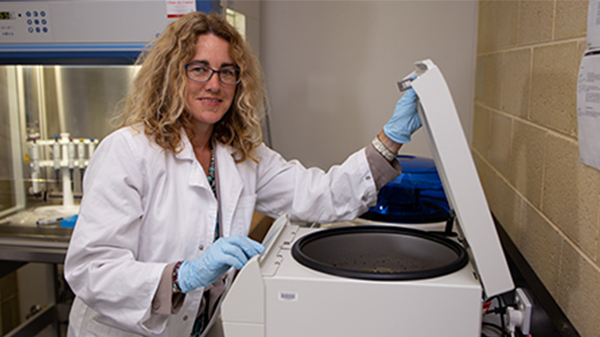
Writing, rewriting and more rewriting!
The skills I have learnt while studying the Integrated PhD have assisted with my research proposal, literature reviews, data analysis and grant writing.
My ethics application helped with recruitment of participants and surveys. I've also learnt how to develop and analyse complex surveys. I've attended many workshops run by GRS and found them invaluable. And the GRS SOAR centre helped when I experienced issues designing my surveys.
In the future I want to work with developers and government, and continue writing and teaching about the importance of nature to human health.
-
I would like to become a professor and strength and conditioning coach
I got a masters degree in the United States, but had no research experience before I came to ECU. I wanted to pursue my PhD under Dr. Haff and Dr. Nosaka.
The first year of the Integrated PhD helped me gain research skills such as writing, reading, presenting, and skills needed for experimentation. My supervisors have been devoting so much of their time to assist me to gain these skills.

-
There are so many highlights to studying an Integrated PhD at ECU
Joining the ECU research community and working alongside and getting to know PhD students from across all Schools is a real benefit of the coursework component. Not only have I received training and experience to assist me with undertaking a PhD, but I now have a broad knowledge of research-related industry, business and the media.
The genuine interest that the academic staff have in my research and their willingness to share their expertise makes undertaking an Integrated PhD at ECU an absolute privilege.

Quick guide to uni-speak
-
-
The Australian Qualifications Framework (AQF) is the national regulator of qualifications in the Australian education and training system. The AQF defines the essential characteristics, including the required learning outcomes, of the different types of qualifications issued across the higher education systems in Australia.
-
ATAR is the Australian Tertiary Admission Rank, the primary criterion for entry into most undergraduate university courses in Australia. The ATAR is a percentile score which denotes a student's ranking relative to their state-wide peers upon completion of their secondary education.
-
CRICOS is the Commonwealth Register of Institutions and Courses for Overseas Students. A CRICOS code is allocated to education institutions (like ECU) who are approved to recruit, enrol and deliver education to overseas students. Courses with a CRICOS code are available to international students who meet the entry requirements.
-
A major, or unit set, is your chosen area of in-depth study in an undergraduate course. It usually involves 8 units of study, or one-third of the units in a 3-year degree. Talk to your Student Information Office if you need help choosing a major subject.
-
Minors include between 4 and 6 study units in a specific discipline. Not all courses require you to complete a minor. Your minor subject doesn't appear on your printed degree (parchment), but is part of your academic transcript.
-
If you're enrolled in 3 or more units in a semester this is considered full-time study. To complete most 3-year degrees studying full-time you'll need to complete 4 units per semester, i.e. 24 units over 3 years.
-
-
-
If a course is available to study part-time you can generally expect it to take twice as long to complete as it would in full-time mode. Part-time students are enrolled in 1 or 2 units maximum per semester.
Note: International students who hold a student visa can only choose the full-time study option for our courses. This is to ensure the course is completed within the duration of the student visa.
-
Most courses start in Semester 1 each year, usually in the last week of February. Some courses can be started in Semester 2 (we call this mid-year). There's a week of Orientation before each semester to help you get used to uni life.
-
A lot of our courses start in Semester 2 each year, usually in the last week of July. We call this mid-year. There's a week of Orientation beforehand to help you get used to uni life.
-
We use a points system to make it easier for you to understand your study progress. Most Bachelors degree study units are allocated 15 credit points. If you're studying a 3-year full-time degree you'll need to successfully complete 360 credit points - that's 24 units x 15 points per unit.
-
These are compulsory units you have to successfully complete as part of your course.
-
An elective is a unit you choose to study that counts towards your course requirements, but isn't compulsory. For some courses we recommend elective units. In some situations, a course coordinator may approve an elective unit as a replacement for a compulsory one.
-
Quick guide to uni-speak
-
-
The Australian Qualifications Framework (AQF) is the national regulator of qualifications in the Australian education and training system. The AQF defines the essential characteristics, including the required learning outcomes, of the different types of qualifications issued across the higher education systems in Australia.
-
ATAR is the Australian Tertiary Admission Rank, the primary criterion for entry into most undergraduate university courses in Australia. The ATAR is a percentile score which denotes a student's ranking relative to their state-wide peers upon completion of their secondary education.
-
CRICOS is the Commonwealth Register of Institutions and Courses for Overseas Students. A CRICOS code is allocated to education institutions (like ECU) who are approved to recruit, enrol and deliver education to overseas students. Courses with a CRICOS code are available to international students who meet the entry requirements.
-
A major, or unit set, is your chosen area of in-depth study in an undergraduate course. It usually involves 8 units of study, or one-third of the units in a 3-year degree. Talk to your Student Information Office if you need help choosing a major subject.
-
Minors include between 4 and 6 study units in a specific discipline. Not all courses require you to complete a minor. Your minor subject doesn't appear on your printed degree (parchment), but is part of your academic transcript.
-
If you're enrolled in 3 or more units in a semester this is considered full-time study. To complete most 3-year degrees studying full-time you'll need to complete 4 units per semester, i.e. 24 units over 3 years.
-
-
-
If a course is available to study part-time you can generally expect it to take twice as long to complete as it would in full-time mode. Part-time students are enrolled in 1 or 2 units maximum per semester.
Note: International students who hold a student visa can only choose the full-time study option for our courses. This is to ensure the course is completed within the duration of the student visa.
-
Most courses start in Semester 1 each year, usually in the last week of February. Some courses can be started in Semester 2 (we call this mid-year). There's a week of Orientation before each semester to help you get used to uni life.
-
A lot of our courses start in Semester 2 each year, usually in the last week of July. We call this mid-year. There's a week of Orientation beforehand to help you get used to uni life.
-
We use a points system to make it easier for you to understand your study progress. Most Bachelors degree study units are allocated 15 credit points. If you're studying a 3-year full-time degree you'll need to successfully complete 360 credit points - that's 24 units x 15 points per unit.
-
These are compulsory units you have to successfully complete as part of your course.
-
An elective is a unit you choose to study that counts towards your course requirements, but isn't compulsory. For some courses we recommend elective units. In some situations, a course coordinator may approve an elective unit as a replacement for a compulsory one.
-
Do you have any questions about the Doctor of Philosophy (Integrated)?
The Important Things
Things you should know about if you're thinking about studying here.
Course Entry
There's more than one admission pathway into an ECU course. It depends on what you've studied already, or your work or life experience.
Fees & Scholarships
Course tuition fees can change, but we can give you an estimate of your costs. If you're eligible, a scholarship or student loan can help too.
Applying
Applying for a course is a fairly simple process, especially if you have scanned copies of qualifications, your resume or other paperwork, ready to upload.
ECU Experience
Starting a course is an exciting and sometimes daunting time, so we make a massive effort to ensure you get all the support you need to have a positive experience.