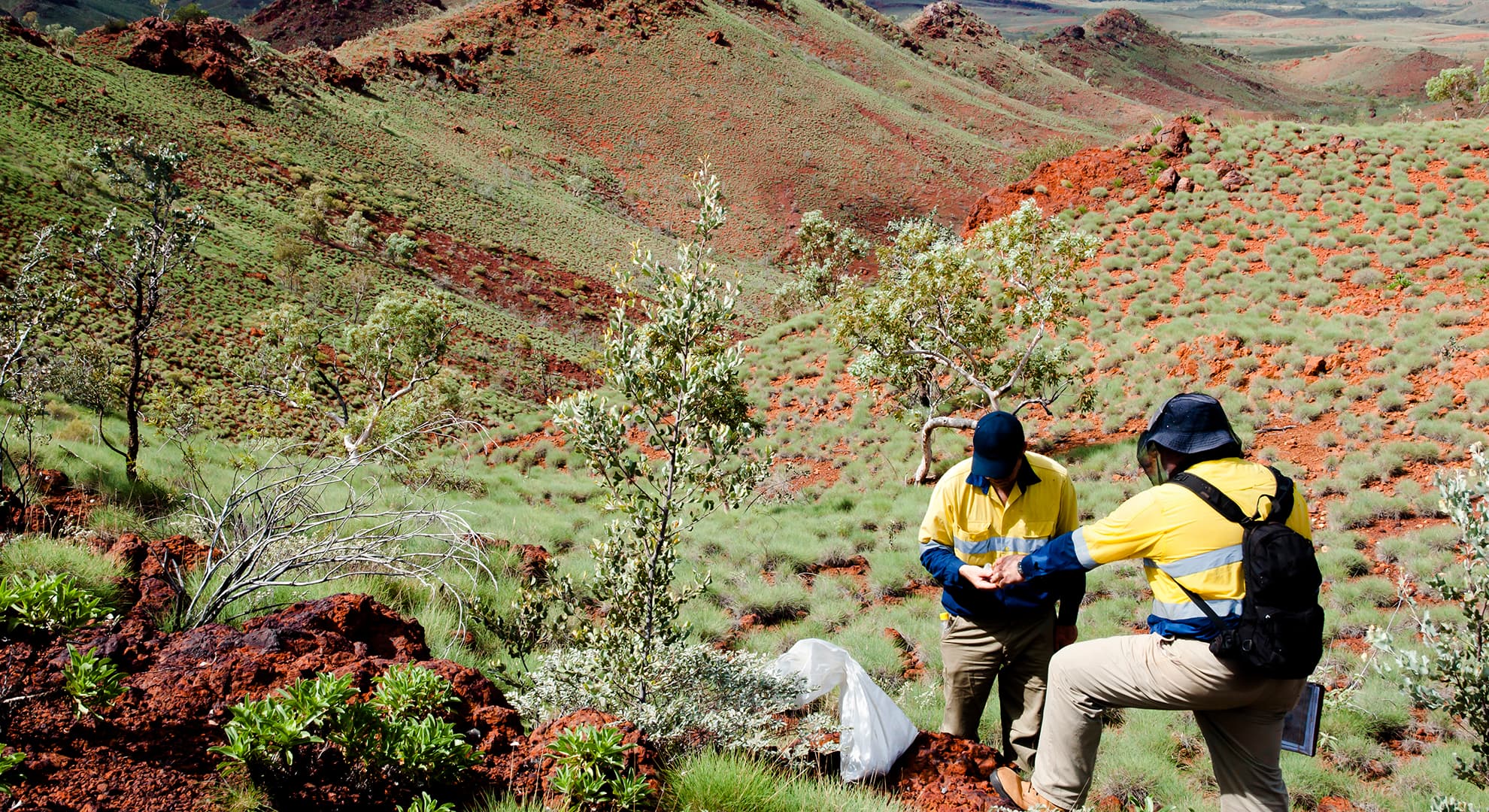
 Biased treatment by supervisors was one of five key psychosocial hazards identified in the study. Image credit: Adrian Wojcik, iStock.
The vital role worker voice plays in mitigating psychosocial hazards in the Pilbara iron ore industry has been highlighted by a new report published by the Mental Awareness, Respect and Safety (MARS) Centre at Edith Cowan University (ECU).
Worker voice is a mechanism employees can use to express dissatisfaction in the workplace and create positive changes, either as an individual (such as a discussion with your supervisor) or as a collective (union representation and bargaining).
The interim findings are based on in-depth interviews with both Fly-In-Fly-Out (FIFO) workers on varying rosters, residential workers and union officials.
Risky business
Co-Chief Investigator Dr Heidi Vivian from ECU's School of Business and Law said serious issues remain in Western Australia's mining industry despite legislative reform.
"Workplace psychosocial hazards are known causes of work-related distress and even suicide. In Australia, they are now considered to be a serious work health and safety issue," Dr Vivian said.
The Work Health and Safety Act of 2011 (WHS Act) mandated that employers must manage psychosocial hazards, and the Work Health and Safety Amendment Regulations of 2023, with specific relevance to psychosocial hazards, were introduced to provide better guidance to workers and employers in seeking to manage these risks.
"However, serious issues remain for workers in the Pilbara iron ore industry," Dr Vivian warned.
The role of worker voice
The study aimed to provide guidance to industry on the importance of worker voice in managing psychosocial risks.
"Through interviews with workers employed in operational roles at iron ore companies, alongside a small number of union officials, our research aimed to investigate the effectiveness of worker voice – both through company and union channels," Dr Vivian said.
"We found that company-driven avenues for collective worker voice such as staff surveys were widely seen as ineffective or lacking in confidentiality, and avenues for individual voice at work such as discussing things with a supervisor or HR were ultimately constrained. HR is generally perceived as on the side of the company, not the employees. We also identified a disturbing culture of employees fearing speaking up, being targeted for speaking out or being in the union."
An interesting finding was the discontent and division caused by employees doing the same job getting different pay and bonuses.
Key psychosocial hazards identified
- Poor organisational justice: Biased treatment by supervisors. The industry term 'purple circle' is often used, referring to cliques or in-groups who receive favourable treatment.
- Poor leadership practices and workplace culture: Supervisor behaviour and operational experience (or lack of).
- Inappropriate and unreasonable workplace behaviour: Bullying, sexism, sexual harassment, sexual assault and inadequate management response.
- Fatigue: Monotonous tasks and long shifts or high cognitive load, night shifts, extra time spent travelling to work, extra shifts, travel delays and not getting proper breaks.
- Other issues: Work environment, food quality and availability, accommodation, extended periods away from home, discipline, surveillance and job insecurity.
Co-Chief Investigator Dr Alexis Vassiley, also from ECU's School of Business and Law, said the report highlighted the positive role unionism could play in mitigating psychosocial hazards. "Some interviewees had been provided direct support by their union in dealing with an issue, and others viewed the union as protection in case something went wrong," he said.
"Unions give workers an avenue for voice outside of company hierarchies. Collective bargaining by unions can make that voice heard and help address psychosocial hazards."
Implications for industry
Dr Vivian said the findings show psychosocial hazards in mining are mutually reinforcing.
"Workers are dealing with fatigue, monitoring, blocked progression, poor supervision, interpersonal harm, weak communication, camp/living issues, and work-home pressures. But these hazards become more damaging when workers also feel that decisions are unfair, supervisors cannot be trusted, and speaking up may not lead to change," she said.
"Worker voice is therefore central. Voice is not just a way to report psychosocial hazards after they occur. It is part of the psychosocial risk environment itself. Where voice is safe, trusted, and acted on, it can help control psychosocial hazards. Where voice is ignored, performative, unsafe, or punished, it can make psychosocial hazards worse."
The report findings suggest that psychosocial hazards in mining are not only produced by demanding work conditions but also by unfair, punitive, unclear, or unresponsive organisational systems that workers experience.
"Mine sites are dangerous places. It's not just physical hazards – psychosocial hazards are rife as our study has shown," Dr Vassiley said.
"Worker voice has real potential to identify and address these hazards, but only when workers feel safe to speak up. It's vital we see meaningful action taken in this industry."
The role of worker voice in managing psychosocial hazards in the Western Australian mining industry, Mental Awareness, Respect and Safety Centre (MARS) Centre Research Report was conducted as part of the ECU MARS Centre's Digging Deeper Research Program and funded by The Department of Local Government, Industry Regulation and Safety (LGIRS).
Resources for industry are available for download at the Mental Awareness, Respect and Safety (MARS) Centre webpage.