
Bachelor of Science (Occupational Therapy) Honours
Course code Y63
Why study at ECU?
-

A great student experience
As an ECU undergraduate, you can expect the best overall student experience of any of the 38 public universities in Australia. More about QILT.
-

The highest quality teaching
ECU is one of the best unis in Australia for teaching. We've had 19 straight years of 5-star ratings in the Good Universities Guide to prove it!
-

One of the world's young guns
We're ranked one of the world's best universities under 50 years old, and we've already established a global reputation for such a young institution.
Toggle between study options for Domestic or International students
Important
This course is not available to International students.
Want to look for another option?
To help our students with a career direction, we group similar fields of work into study areas.
Within each study area below you can choose an undergraduate or postgraduate degree. And within most degree courses, you can choose your speciality, or major subject.







About this Course
This course is for students who are enrolled in ECU's Bachelor of Occupational Therapy. Applications are by invitation based on a student's academic performance in the first three years of their course.
Allows students to develop an understanding of the factors that affect occupational performance in areas of self-care, education, work, social participation, play and leisure for individuals, groups and populations through the lifespan.
Fieldwork placements throughout the course provide students with valuable learning experiences in a range of settings. Graduates will possess a sound knowledge and understanding of professional principles and processes, and will be able to generalise their attributes and skills in new situations.
Australian Qualifications Framework (AQF) level
This course has been accredited by ECU as an AQF Level 8 Bachelor Honours Degree Award.
Course code
Y63Entry requirements
ECU admission and English language requirements apply.
See Course Entry for further information.
Admissions
Fees
Domestic fee paying - estimated 1st year indicative fee AUD $35,800
See Fees and Scholarships for further information.
Availability & Campus
This course is not available to all students. To discuss your options, please make an enquiry.
Course Entry
Admission requirements you'll need to meet for this course.
-
The following course-specific admission requirements are mandatory and must be satisfied by all applicants. These requirements are in addition to or supersede the minimum requirements outlined within the Academic admission requirements band section below.
All applicants are required to be enrolled in the Bachelor of Science (Occupational Therapy) and have a Weighted Average Mark (WAM) of 70 per cent or higher in the first three years of the course. Acceptance into the Honours program is by invitation only and successful applicants will transfer from the Bachelor of Science (Occupational Therapy).
All applicants must meet the academic admission requirements for this course. The indicative or guaranteed ATAR is as published (where applicable) or academic admission requirements may be satisfied through completion of one of the following:
- Year 12 completion or equivalent.
For international students, requirements include your secondary school results
-
English competency requirements may be satisfied through completion of one of the following:
- IELTS Academic Overall band minimum score of 6.5 (no individual band less than 6.0);
- Bachelor degree from a country specified on the English Proficiency Bands page;
- Successfully completed 0.375 EFTSL of study at postgraduate level or higher at an Australian higher education provider (or equivalent);
- Where accepted, equivalent prior learning, including at least five years relevant professional experience; or
- Other tests, courses or programs defined on the English Proficiency Bands page.
International students are required to provide an IELTS Academic with an overall minimum score of 7.5 (no individual band less than 7.0). Internationally schooled applicants may also be required to meet this requirement.
Minimum English standard requirements for this course may also be satisfied with one of the following:
- Year 12 English ATAR/English Literature ATAR grade C or better or equivalent;
- Skills for Tertiary Admissions Test;*
- Successfully completed 1.0 EFTSL of study at bachelor level or higher in the UK, Ireland, USA, NZ or Canada;
- University Preparation Course;
- Indigenous University Orientation Course;*
- Aboriginal Student Intake Test;*
- AQF Diploma, Advanced Diploma or Associate Degree; or
- Successfully completed 0.375 EFTSL of study at bachelor level or higher at an Australian higher education provider (or equivalent).
Applications for this course are not accepted through ECU's Experience Based Entry Scheme.
Course Details
Semester availability
This course is not available to all students. To discuss your options, please make an enquiry.
Course Structure
| Unit Code | Unit Title | Credit Points |
|---|---|---|
| OCT1101 | Theory of Occupation | 15 |
| OCT1102 | Occupation and Equity | 15 |
| MHS1101 | Anatomy and Physiology 1 | 15 |
| OCT1204 | Introduction to Professional Practice | 15 |
| Unit Code | Unit Title | Credit Points |
|---|---|---|
| OCT1205 | Occupational Analysis | 15 |
| OCT1220 | Neuroscience for Occupational Therapy | 15 |
| MHS1102 | Anatomy and Physiology 2 | 15 |
| OCT1108 | Introduction to Evidence Informed Practice | 15 |
| Unit Code | Unit Title | Credit Points |
|---|---|---|
| OCT2100 | Enabling Participation for Children and Youth | 15 |
| OCT2101 | Foundations of Biomechanics and Hand Therapy | 15 |
| OCT2102 | Health Conditions and Occupational Performance | 15 |
| OCT2103 | Workplace Rehabilitation | 15 |
| Unit Code | Unit Title | Credit Points |
|---|---|---|
| OCT2104 | Mental Health Conditions and Occupational Performance | 15 |
| OCT2105 | Enabling Participation for Older Adults | 15 |
| OCT2250 | Counselling and Group Processes In Occupational Therapy | 15 |
| OCT2251 | Assistive Technology | 15 |
| Unit Code | Unit Title | Credit Points |
|---|---|---|
| OCT3102 | Enabling Occupation: Physical Conditions | 15 |
| OCT3104 | Enabling Occupation: Mental Health | 15 |
| OCT3105 | Enabling Occupation: Disability | 15 |
| ACS4133 | Aboriginal Communities | 15 |
| Unit Code | Unit Title | Credit Points |
|---|---|---|
| OCT3107 | Enabling Occupation: Neurological Conditions | 15 |
| OCT3303 | Extended Professional Practice One | 30 |
| OCT3210 | Honours Research Preparation | 15 |
Y63|6
For more detailed unit information for this course take a look at our Handbook. To organise your life for next semester visit the Teaching timetable.
Student handbookCourse notes
Important course notes
-
Students from H96 will enter Y63 having already completed 316 hours of professional placement.
Year 3 OCT3303 320 hours (6 week block)
Year 4
OCT4201 320 hours (6 week block in summer school)
OCT 4202 320 hours (8 week block)Attendance requirements
Students may be provided with the opportunity to undertake some professional placements in a rural or regional setting.
Students will be required to attend for the hours and days as specified by the host organisation. Additionally, due to circumstances beyond the control of the School, allocations may be changed with minimal notice to students.Clearances and/or Risk Management Protocols Required
To be eligible to undertake professional placement and fulfil their duty of care, students are required to complete risk management protocols on commencement of the course and carry out amendments in subsequent semesters, as appropriate. Risk management protocols include, but are not restricted to:
COVID vaccinations
Certificate of National Police Clearance
Current WA Department of Health Criminal Record Screening Clearance Card
Current First Aid Certificate
Department of Education and Training National Criminal History Record Check
Evidence of immunisation status as per the Department of Health schedule, more information at www.health.wa.gov.au/circularsnew/circular.cfm?Circ_ID=12275
MRSA clearance if worked in, or been admitted to, a health facility outside of Western Australia in the 12 months prior to enrolment
Working with Children Check, more information at www.checkwwc.wa.gov.au
Due to the practical nature of the Occupational Therapy professions and protection of the public, there are inherent requirements applicable to this course that may impact upon the success of some potential students. Applicants and students with a disability or other issue likely to impact on their ability to perform in practice are encouraged to contact the Access and Inclusion Service to discuss their situation.
More information can be found at https://www.ecu.edu.au/schools/medical-and-health-sciences/placements/inherent-requirementsProfessional practice rules
The professional placement component of the course needs to comply with the Professional Accreditation Standards for Occupational Therapy Entry Level Education Programs as devised by the Occupational Therapy Council Ltd (OTC).
Students must complete a minimum of 1000 hours of professional placement that is in line with the World Federation of Occupational Therapists (WFOT). These professional placement opportunities will require students to integrate knowledge, skills and attitudes to practice with a range of people who have different needs, and in differing circumstances. Students are required to be supervised and assessed by a registered occupational therapist. -
Students can apply for membership with Occupational Therapy Australia. Membership is available to students.
-
Students will need to graduate to be eligible to register with the Occupational Therapy Board of Australia . Registration with the Occupational Therapy Board of Australia is required to practice in the profession.
In order for students to be eligible to register with the Australian Health Professional Regulatory Agency (AHPRA), students will be required to adhere to the policy regarding English Language minimum requirements and meet other requirements for health and good character for registration as an occupational therapist in Australia .
Course learning outcomes
- Apply advanced contemporary occupational therapy knowledge and skills to a broad range of theoretical and practical situations.
- Think creatively and critically to anticipate challenges, and generate client-centred responses with individuals, groups, communities and populations.
- Evaluate, synthesise and critique information from digital technologies and other sources to support problem solving and decision making.
- Communicate occupational therapy knowledge, evidence and theory, clearly, coherently, and with independence.
- Demonstrate cultural capability with respect to Aboriginal and Torres Strait Islander peoples and other cultures within society.
- Work collaboratively to support effective client-centred practice in diverse teams and environments.
- Demonstrate responsibility and accountability for own learning to ensure occupational therapy practice that is safe, ethical and lawful.
- Demonstrate the competency standards required for occupational therapy registration in Australia.
Professional Recognition
CourseApproved by: World Federation of Occupational Therapists (WFOT)
Accredited by: Occupational Therapy Council of Australia Limited
The Bachelor of Science (Occupational Therapy) (Pass and Honours) is accredited by the Occupational Therapy Council of Australia Ltd (OTC) and approved by the Occupational Therapy Board of Australia (OTBA). Graduates will be eligible to apply for registration as an occupational therapist with the OTBA. The course is also approved by the World Federation of Occupational Therapists.
Fees and Scholarships
Fees
- AUD $35,800 - Domestic fee paying estimated 1st year indicative fee 1
Note
1 The 'estimated 1st year indicative fee' is provided as a guide only, based on a typical enrolment of students undertaking the first year of this course. At ECU, you pay for the individual units you enrol in, not an overall course fee, so the total cost of your course will vary, depending on what units you choose. An indicative fee will be provided with your course offer, however you can use our Course Fee Calculator to estimate the actual amount you'll need to pay. ECU fees are adjusted annually.
Some units require the payment of a fee for incidental goods or services required to complete those units. For more information and the full list of incidental fees for courses and units, visit What are Incidental Fees.
Scholarships
ECU has a scholarship program that provides many opportunities each year to students undertaking studies here.
Find a scholarshipCareer Opportunities
Occupational therapy graduates have excellent employment outcomes. Registered occupational therapists work in acute, rehabilitation and long term settings, private practice, or community in a diverse range of roles..
Possible future job titles
Occupational Therapist, Project manager, Care coordinator, Rehabilitation consultant, Health and Wellness Coordinator, Aged and Community Care coordinator, Case manager.
Similar courses to consider
- Bachelor of Science (Occupational Therapy)
Upon completion of the first semester of 3rd year of the Bachelor of Science (Occupational Therapy), eligible students may be invited to apply for entry into the Bachelor of Science (Occupational Therapy) Honours. Students who are offered and accept a place in the Honours program will transfer to the Bachelor of Science (Occupational Therapy) Honours to complete the final 3 semesters of study.
Need some help deciding what to study?
Our future student events include a mix of on-campus and online sessions designed to help you decide what to study at ECU.
Discover what it's like to study at ECU
Hear from students, graduates, academics and industry professionals as they share their experiences and insights.
Student stories
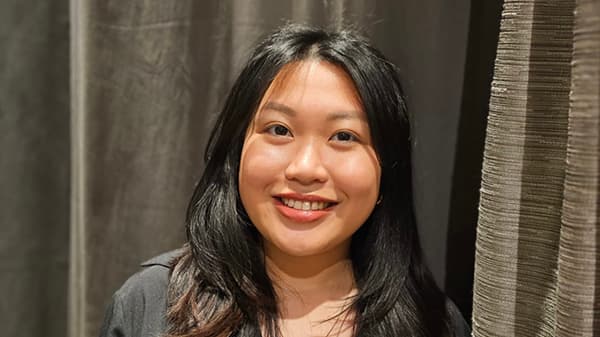
I decided to follow my heart and pursue occupational therapy, rather than always wonder 'what if.'
I used to work as an HR admin for an aged care and disability organisation, recruiting carers, nurses, and allied health professionals.
Hearing them talk about how fulfilling they felt in their roles really inspired me. That's when I decided to follow my heart and pursue occupational therapy.
Quick guide to uni-speak
-
-
The Australian Qualifications Framework (AQF) is the national regulator of qualifications in the Australian education and training system. The AQF defines the essential characteristics, including the required learning outcomes, of the different types of qualifications issued across the higher education systems in Australia.
-
ATAR is the Australian Tertiary Admission Rank, the primary criterion for entry into most undergraduate university courses in Australia. The ATAR is a percentile score which denotes a student's ranking relative to their state-wide peers upon completion of their secondary education.
-
CRICOS is the Commonwealth Register of Institutions and Courses for Overseas Students. A CRICOS code is allocated to education institutions (like ECU) who are approved to recruit, enrol and deliver education to overseas students. Courses with a CRICOS code are available to international students who meet the entry requirements.
-
A major, or unit set, is your chosen area of in-depth study in an undergraduate course. It usually involves 8 units of study, or one-third of the units in a 3-year degree. Talk to your Student Information Office if you need help choosing a major subject.
-
Minors include between 4 and 6 study units in a specific discipline. Not all courses require you to complete a minor. Your minor subject doesn't appear on your printed degree (parchment), but is part of your academic transcript.
-
If you're enrolled in 3 or more units in a semester this is considered full-time study. To complete most 3-year degrees studying full-time you'll need to complete 4 units per semester, i.e. 24 units over 3 years.
-
-
-
If a course is available to study part-time you can generally expect it to take twice as long to complete as it would in full-time mode. Part-time students are enrolled in 1 or 2 units maximum per semester.
Note: International students who hold a student visa can only choose the full-time study option for our courses. This is to ensure the course is completed within the duration of the student visa.
-
Most courses start in Semester 1 each year, usually in the last week of February. Some courses can be started in Semester 2 (we call this mid-year). There's a week of Orientation before each semester to help you get used to uni life.
-
A lot of our courses start in Semester 2 each year, usually in the last week of July. We call this mid-year. There's a week of Orientation beforehand to help you get used to uni life.
-
We use a points system to make it easier for you to understand your study progress. Most Bachelors degree study units are allocated 15 credit points. If you're studying a 3-year full-time degree you'll need to successfully complete 360 credit points - that's 24 units x 15 points per unit.
-
These are compulsory units you have to successfully complete as part of your course.
-
An elective is a unit you choose to study that counts towards your course requirements, but isn't compulsory. For some courses we recommend elective units. In some situations, a course coordinator may approve an elective unit as a replacement for a compulsory one.
-
Do you have any questions about the Bachelor of Science (Occupational Therapy) Honours?
The Important Things
Things you should know about if you're thinking about studying here.
Course Entry
There's more than one admission pathway into an ECU course. It depends on what you've studied already, or your work or life experience.
Fees & Scholarships
Course tuition fees can change, but we can give you an estimate of your costs. If you're eligible, a scholarship or student loan can help too.
Applying
Applying for a course is a fairly simple process, especially if you have scanned copies of qualifications, your resume or other paperwork, ready to upload.
ECU Experience
Starting a course is an exciting and sometimes daunting time, so we make a massive effort to ensure you get all the support you need to have a positive experience.