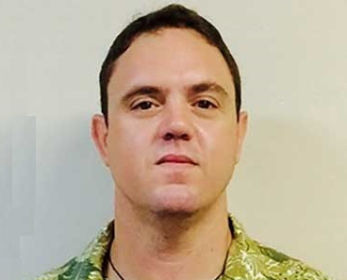
Aaron is a Senior Research Fellow in Planetary Health within the School of Science.
Background
- 2017 – Present: Edith Cowan University, School of Sciences, Perth, Western Australia. Research Fellow in Planetary Health
- 2013 – 2017: Edith Cowan University, School of Sciences, Perth, Western Australia. Assistant lecturer, Aquatic ecologist & Doctoral candidate
- 2011 – Present: Integrated Conservation & Development consultant, South Pacific Region. Senior Technical advisor & project manager
- 1999 – 2011: Wetlands International – Oceania, Canberra, Australia & Suva, Fiji. Senior Program Manager
- 2002 – 2011: University of the South Pacific, Suva Fiji. Assistant lecturer, adjunct researcher
- 1998 – 1999: New England Biolabs Foundation, Perth, Australia & Madang, Papua New Guinea. Coral reef & Aquatic ecology consultant
- 1998 – 1999: Western Australian Museum, Perth, Australia. Taxonomist in Department of Aquatic Zoology
- 1996 – 1997: Christensen Research Institute, Madang, Papua New Guinea. Research fellow – Coral reef & Aquatic ecology
- 1997: Village Development Trust, Lae, Papua New Guinea. Aquatic ecology consultant
- 1997: World Wildlife Fund, Southern Highlands, Papua New Guinea. Environmental Coordinator for Kikori Integrated Conservation and Development Project (ICDP)
- 1997: University of Papua New Guinea, Madang, Papua New Guinea . Lecturer
Professional Memberships
- International Association of Ecology & Health (Board member, founding member Oceania Chapter)
- Pacific Water, Sanitation and Hygiene (WASH) Coalition (founding member)
- World Commission on Protected Areas (Oceania advisor)
- Ramsar Convention Scientific & Technical Panel (Oceania advisor)
- Convention on the International Trade in Endangered Species Scientific Council (Fiji advisor)
- Species Survival Commission (Oceania co-chair Freshwater specialist group)
- National Association of Underwater Instructors
- National Wetlands Committee of Fiji (founding member)
- Protected Areas Committee of Fiji (founding member)
- Fiji Communicable Disease Committee (Fiji)
Awards and Recognition
- November 2019 – AUD 4,100,000 - Korea International Cooperation Agency – Fiji Government Water Quality Testing Laboratory - Suva, Fiji – Capacity Development Plan
- February 2019 – AUD 150, 654 - Bill & Melinda Gates Foundation - Describing the nested micro-ecology of sediment associated biofilms in high typhoid incidence hydrological networks.
- February 2019 – AUD 150, 654 - Bill & Melinda Gates Foundation - Impact of Salmonella Typhi genome structure upon survival in water.
- February 2019 – AUD 150, 654 - Bill & Melinda Gates Foundation - Deciphering Salmonella Typhi interactions contributing to persistence within the water microbial community.
- November 2018 – AUD 53, 000 – Wellcome Trust - Oceania Planetary Health Forum – Strengthening Partnerships for Nature and Human Health.
- October 2018 – AUD 2,780,000 - Bloomberg Philanthropies -Vibrant Reefs (Fiji): Reducing land-based impacts on coral reefs through catchment management.
- July 2018 – AUD 2,001,000 – Australian Department of Foreign Affairs and Trade, Stronger Systems for Health Security - Securing health in Fiji through strengthened health systems and integrated water management to tackle the Three Plagues: typhoid, dengue and leptospirosis.
- April 2018 – AUD 35,000 - Bill & Melinda Gates Foundation - Symposium at EcoHealth Cali: Socio-ecological foundations of persistence and fate of enteric pathogens in the environment
- September 2017 – AUD 9124 - University of Sydney - Harvard Mobility Scheme - Developing (U Sydney -Harvard) research and teaching collaboration in Planetary Health
- August 2017 – AUD 20, 000 - Marie Bashir Institute Seed Funding - Pilot investigation of zoonotic TB contribution to tuberculosis among people and cattle in Fiji
- June 2017 – AUD 6270 - Edith Cowan University Collaborative Enhancement Scheme - Enhancing research collaborations at the nexus of ecology and human health.
- October 2015 – AUD 348, 228 – Bill & Melinda Gates Foundation – Studies on typhoid epidemiology and prevention in Fiji.
- February 2015 – AUD 27, 800 – UNICEF – Strengthening evidence for Water, Sanitation and Hygiene (WASH) interventions: a pilot program of Typhoid Epidemiology and Prevention in Fiji.
- March 2014 – AUD 37, 500 – Edith Cowan University/Health & Ecosystems: Analysis of Linkages (WCS) Foundational aspects of a research collaboration on health, water & landscapes: a database and a learning network.
- December 2012 – AUD 91, 000 – Australian Postgraduate Research Award for doctoral research on“Fijian floods, feces & fishes: exploring common determinants of typhoid resurgence & food fish decline in Pacific island river basins.”
- February 2011 – Wetlands International Award for “Outstanding contributions to science and its application to wetlands conservation.”
- September 2010 – AUD 45, 500 – Wetlands International – Managing biosecurity risks of exotic fish introductions to Pacific Island wetland ecosystems.
- September 2010 – AUD 213, 000 – Netherlands Directorate General of Development Co-operation - Wetlands, Human Health and Food Security in Pacific Islands - interrelationships between ecological integrity and human health in selected major wetland types of the Pacific Islands region.
- January 2008 – AUD 1,700, 000 – The Gordon and Betty Moore Foundation & David and Lucile Packard Foundation – for Phase 2 of An Ecosystem-Based Approach for Managing Tropical Coastal Ecosystems in Fiji’s Vatu-i-Ra World Heritage Seascape.
- November 2005 – AUD 1, 700,000 – an anonymous donor for a Holistic Approach to Development on the North Coast of Papua New Guinea: Reproductive/Sexual Health, Environment and Community Mobilization. (through Alternate Visions LLC, Pathfinder International and PNG Ministry of Social Development)
- March 2005 – AUD 1,700, 000 – The Gordon and Betty Moore Foundation & David and Lucile Packard Foundation – An Ecosystem-Based Approach for Managing Tropical Coastal Ecosystems in Fiji’s Vatu-i-Ra World Heritage Seascape.
- April 2004 – AUD 280, 000 – The John D. and Catherine T. MacArthur Foundation – to strengthen local capacity to assess, monitor, and manage coastal and freshwater systems in Melanesia.
- January 2002 – AUD 60, 000– The Natural Heritage Trust – to develop and deliver wetland and water ecology training in Fiji, Vanuatu and Solomon Islands for government and NGO wetland managers.
- July 2001 – AUD 240, 000 – The John D. and Catherine T. MacArthur Foundation – to facilitate the development of a socially and ecologically sustainable network of locally managed protected areas for the Mamose region of the north coast Papua New Guinea.
- April 2000 – AUD 18, 500 – World Wildlife Fund – to assist in the development of integrated conservation programs for Papua New Guinea and the Solomon Islands.
- August 1999 – AUD 50, 000 –Commonwealth of Australia –for Ramsar Convention promotion in the Pacific Islands region.
- August 1999 – AUD 50,000– for building capacity for freshwater quality and resource inventory in two Pacific Island countries, Papua New Guinea and Federated States of Micronesia.
- June 1999 – AUD 15, 000 – Natural Heritage Trust: for developing community monitoring protocols for the Corner Inlet Ramsar site, Victoria, Australia.
- November 1998 – AUD 20, 200 – New England Biolabs Foundation - toreinvigorate community conservation initiatives on the North Coast of Papua New Guinea and facilitate reserve establishment.
- June 1997 – AUD 18, 600– World Wildlife Fund: for developing and implementing a community-based management scheme for sustainable fisheries in Lake Kutubu, Papua New Guinea and facilitating the establishment of the Wasi Falls Wildlife Management Area.
- October 1996– AUD 16, 700 – New England Biolabs Foundation – for training a Papua New Guinean marine and freshwater conservation biologist.
Research Areas and Interests
Crosscutting development themes including:
- Wetland management for health, nutrition and climate change mitigation, WASH and waterborne disease management
- Intersections of climate change, natural disasters, land and water management on health and sustainable fisheries
An error has occurred that is preventing this content from displaying properly.
We apologise for the inconvenience that this may cause, and ask that you try again at another time.
If this problem persists, please report it to the IT Service Desk, via email: itservicedesk@ecu.edu.au or phone: +61 (08) 6304 6000 or extension 6000.