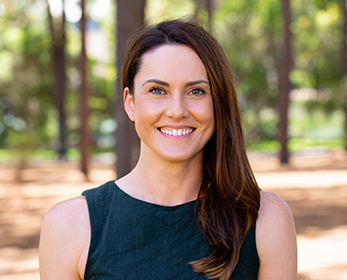
Dr. Smith is a National Heart Foundation and Vice-Chancellor’s Postdoctoral Research Fellow at ECU’s Nutrition & Health Innovation Research Institute within the School of Medical and Health Sciences (SMHS). An Accredited Exercise Physiologist and Scientist (ESSM, AEP/AES) with over a decade of clinical experience, she completed her PhD at Victoria University in 2022, where her doctoral research explored bone-derived peptides, bone-muscle crosstalk, and the influence of exercise and ageing on these processes. Her current research investigates why, with age, bone is lost from the skeleton while calcium accumulates in blood vessels – focusing on menopause and its potential role in the sex disparity observed in cardiovascular disease. Her work incorporates lived experience and community engagement to ensure real-world relevance and optimise interventions that save lives and improve quality of life.
She has published work in leading journals, including Arteriosclerosis, Thrombosis and Vascular Biology, Journal of Bone and Mineral Research, Bone and Sports Medicine, and Ageing Research Reviews. Only 2.3 years post-PhD, she has demonstrated exceptional leadership among early-and mid-career researchers (EMCRs) nationally and internationally. As Co-Chair of the Australian and New Zealand Bone and Mineral Society (2022-2024), she led four subcommittees to deliver initiatives such as exchange programs with international societies and now serves as Past Co-Chair, mentoring incoming leaders. She also contributes to the EMCR committee of the American Society for Bone and Mineral Research, launching mentoring programs, and previously chaired the Early-Career Research (ECR) Committee of the Australian Physiological Society (2020-2022), introducing an annual senior scientist panel. She has led initiatives for the Australian Institute of Musculoskeletal Science, establishing an annual Outstanding ECR Award.
In 2026 she will also be joining the Australian Cardiovascular Alliance (ACvA) Emerging Leaders Committee and the SMHS EMCR Committee where she hopes to continue to drive initiatives to support EMCRs in cardiovascular research at a national level, but also to support local EMCRs.
A champion for women in STEMM and a working mother, she exemplifies how to successfully navigate a demanding research career alongside family responsibilities.
- Your research focuses on the intersection of musculoskeletal and cardiovascular diseases. How did you first become interested in this specific and complex area of science? In my clinical practice is where I first recognised the unmet need of women, who as they were transitioning through menopause and the postmenopausal period felt unheard, confused, and were unaware of their increased risk for osteoporosis and cardiovascular disease. Often, they thought cardiovascular disease (heart attacks) mainly affected men and were not aware of their risk and what they could do about it.
- As an early-mid career research, what have been the most significant challenges and rewards in establishing your independent research portfolio? The biggest challenge has been shifting my young family interstate to set up my research portfolio in a new institute, new research team, and needing to establish a whole new network of collaborations. We also made this move without having any family or friendship support here in Perth. Since arriving in Perth our family has welcomed my gorgeous daughter Scarlett and not having that community network of support (family) to lean on, has been difficult as I have transitioned back to fulltime work. This has been especially evident as at the same time as my family growing, my career is also in a rapid phase of acceleration, and I have had to take international and national trips to deliver invited presentations – obviously I have a rockstar of a husband holding the forte at home! The biggest reward for me, is knowing that my research may have translational impact, and contribute to improving the cardiovascular (heart) health of all women, through advancing our understanding of disease pathophysiology, improving screening and education, and hopefully contribute to closing the sex-gap in CVD.
- How has your experience as a working parent influenced your research focus or approach, if at all? What has supported your return to work at ECU? Becoming a parent is a critical time of transition, it is almost like you meet a whole new version of yourself – certainly this is what I have felt since becoming a mother. In the one sense, it helps to put everything in perspective – what is important to you, what do you want to achieve, what is feasible, and how do you want to model this to your family. For me, this meant zoning in on some things and excusing myself (learning to say no) on others. This has been a real skill to understand the when, how and why of everything that you do and how it contributes to the (your) bigger picture. This is where excellent mentorship and surrounding yourself with a supportive research team has played a very big role in my growth as an ECR, but especially as a young, mother ECR. Those mentors I sought are here, within the SMHS, and I also have additional mentors who I meet with regularly where I pose ideas, have rigorous scientific conversations to develop my emerging research program and stay on track! I have also specifically sought mentors who offer different skillsets and expertise, as well as having mentors who balance family life with the very competitive research career.
- With over a decade of clinical experience as an Accredited Exercise Physiologist, how do you bridge the gap between your practical work with patients and your academic research? I take small learnings through identifying unmet clinical needs in patient care and develop these ideas into questions that can then be addressed in research. In the vice-versa, I take my learnings from research and together with a developed plan for impact, translate this information into a lay summary form to communities. My research program is deeply informed through purposeful community and consumer involvement, where I regularly engage with my established consumer advisory group (people with lived CVD experience), engage with the community through formal endeavours such as a Community Conversation or through invited presentations to local community groups.
- As a champion for women in STEMM, what specific actions or initiatives are you enthusiastic about to support the next generation of women scientists? I would also like to capitalise on my personal experiences as a young female ECR who has experienced two career disruptions (2x parental leave) already in my early research career, and use these learnings to help to build the support infrastructure and initiatives within the university that can empower female ECRs who are planning families, are returning mothers to work, and specifically the challenges of returning within a highly competitive research environment.